 how-to
Common HGV Training Mistakes: How to Avoid Them
Table of Contents
- Common Mistakes in HGV Training: What You Need to Know
- Common HGV Test Mistakes and How to Prevent Them
- HGV Reversing Tips: Mastering the Trickiest Manoeuvre
- HGV Roundabout Mistakes: Avoiding Common Errors
- HGV Driving Test Tips: What Examiners Actually Look For
- What to Do When You Make a Mistake During Training
- Choosing the Right HGV Training Provider
- Conclusion
- Frequently Asked Questions
Last Updated: October 12, 2026
Common Mistakes in HGV Training: What You Need to Know
Getting your HGV licence is a significant investment, yet many candidates spend months preparing only to fail on the day. HGV training mistakes cost test passes and waste thousands on resits.
Most are preventable. They're not about raw driving ability but about knowing what examiners actually look for. We've analysed what separates first-time passers from those who don't.
This guide covers test mistakes, reversing techniques, roundabout errors, and how to choose a training provider that prepares you properly.
Common HGV Test Mistakes and How to Prevent Them
The examiner isn't looking for perfection, just safe, competent driving. But specific errors cost marks immediately, so understanding them before your test gives you an advantage.
Poor observation and mirror checks
This is the number one reason candidates lose marks. Examiners watch your eyes, and if you're not checking mirrors regularly and looking properly at your surroundings, you'll fail.
The mistake isn't forgetting to look, it's looking without seeing. Many drivers glance at mirrors but don't process what's there, missing a cyclist in their blind spot.
Here's what examiners want to see:
- Check mirrors every 5-10 seconds when moving
- Look over your shoulder before changing lanes
- Scan blind spots actively, not just glance
The fix is simple: make your observation deliberate. Pause and think about what you've seen.
Incorrect positioning and lane discipline
HGV drivers must position correctly for every manoeuvre. Incorrect positioning shows the examiner you don't understand how your vehicle behaves.
The most common error is at junctions: pulling too far forward before turning, or positioning too far left on a right turn so the vehicle swings out dangerously.
With a large vehicle, your pivot point differs from a car and the trailer swings out wider on turns.
Lane discipline errors include:
- Straddling two lanes instead of staying centred
- Drifting toward the kerb or centre line
- Not maintaining consistent lane position through curves
Practise by focusing on the centre of your lane, not the edges.
Speed management and braking errors
Speed management means matching your speed to road conditions, not just the limit.
Braking too hard throws the examiner forward and looks like panic; braking too softly suggests you're not in control. The right approach is smooth, progressive braking.
Common speed and braking mistakes:
- Maintaining motorway speed through town centres
- Not slowing down early enough for hazards
- Braking suddenly instead of progressively
Plan ahead. If you see a hazard 200 metres away, start slowing now rather than braking hard at 50 metres.
HGV Reversing Tips: Mastering the Trickiest Manoeuvre
Reversing is the single biggest challenge among HGV training mistakes, accounting for more test failures than any other manoeuvre. It's also the most improvable skill if you understand what you're doing wrong.

Why reversing causes the most test failures
Reversing an HGV is fundamentally different from a car. The trailer doesn't follow the cab, it swings the opposite way, confusing candidates whose instinct comes from car driving.
Reverse a car and turn the wheel right, the back goes right. Reverse an HGV and turn right, the trailer back swings left.
The second reason is poor observation. You can't see directly behind an HGV, so you rely on mirrors and spotters.
Step-by-step reversing technique
Reversing into a bay is the most common manoeuvre tested. Here's the exact process:
Before you start:
- Position your vehicle parallel to the bay, about 2 metres away
- Adjust all mirrors so you can see the bay clearly
- If a spotter is available, brief them on your signals
The approach:
- Move forward slowly until your cab is level with the bay entrance
- Stop completely
- Turn your steering wheel fully toward the bay
During the reverse:
- Watch both mirrors constantly
- Reverse slowly, speed is your enemy
- If the trailer is swinging too far in one direction, straighten the wheel and reposition
Correcting mistakes:
- If you're not lined up correctly, pull forward and reposition
- Never try to "fix it" by reversing further
- It's better to take three attempts to get it right than to damage the vehicle on the first attempt
The examiner wants smooth, controlled reversing. They don't care if you reposition, only that you're aware of what's happening and making deliberate corrections.
Practice drills to build confidence
Reversing takes practice, and most candidates don't get enough. You need at least 20-30 attempts before you feel confident. Structure your practice like this:
Week 1-2: Basics
- Reverse in straight lines in empty car parks
- Focus on smooth steering and mirror checks
- Don't worry about accuracy yet
Week 3-4: Bay reversing
- Find a training ground with marked bays
- Reverse into bays from different angles
- Start with wide bays, progress to tighter ones
Week 5-6: Real-world scenarios
- Reverse on quieter roads
- Reverse into loading bays or delivery areas
- Practise with a spotter giving signals
Week 7+: Test conditions
- Reverse under time pressure
- Reverse with distractions (traffic, pedestrians nearby)
- Reverse when you're tired, this is what test day feels like
HGV Roundabout Mistakes: Avoiding Common Errors
Roundabouts test planning, positioning, and lane discipline at once. Many candidates approach them without thinking ahead, which costs test marks.
Get the Plant Industry Starter Guide →
Positioning and lane selection
The mistake most candidates make is deciding which lane to use as they approach. By then it's too late, you need to decide before you reach the roundabout.
Turning left needs the left lane, straight needs the middle, right needs the right.
The second error is using the wrong lane for your exit, positioning too far left to exit cleanly or in the right lane when the roundabout is tighter than expected and clipping the kerb.
Before you enter a roundabout:
- Identify your exit clearly
- Choose your lane based on that exit
- Commit to that lane 50 metres before the roundabout
Speed and timing through roundabouts
Speed through a roundabout should match its tightness: a large, open one might allow 30 mph, a tight one 10 mph. Many candidates maintain the same speed regardless.
Timing is about yielding to traffic already on the roundabout. Many candidates don't slow enough to actually yield, forcing their way in, which the examiner sees as aggressive and unsafe.
The correct approach:
- Slow to 15-20 mph as you approach
- Look for gaps in traffic
- Yield fully if traffic is coming
HGV Driving Test Tips: What Examiners Actually Look For
The test isn't designed to trick you. Examiners want you to pass and are looking for evidence you can drive an HGV safely. Understanding what they assess changes how you prepare.
Vehicle checks and pre-test preparation
Before the test starts, you'll perform vehicle checks.
Many candidates memorise the checks without understanding why, rattling through them without actually looking. The examiner wants to see you genuinely inspect things.
Here's what matters:
- Check tyre pressure and condition on all wheels
- Look for damage to lights and reflectors
- Verify mirrors are clean and adjusted
Do these checks slowly and deliberately, pointing out what you're checking: "I'm checking the nearside front tyre for damage and correct pressure." This shows you understand why.
Staying calm under pressure
Test day nerves are normal, but they cause mistakes: your heart rate rises, decisions become rushed, and you make errors you wouldn't normally make.
The best way to manage nerves is repetition. If you've done something 50 times in training, muscle memory takes over on test day. This is why practice matters.
On test day itself:
- Arrive early so you're not rushed
- Do your vehicle checks carefully, this settles your nerves
- Breathe deeply before you start driving
What to Do When You Make a Mistake During Training
Mistakes during training are valuable, but many candidates respond the wrong way, getting frustrated, losing confidence, or trying to "fix it" by driving differently.
When you make a mistake in training, pause and analyse it.
A control issue needs more practice of that manoeuvre; a decision issue needs you to think differently about the situation.
Never let a training mistake shake your confidence.
Choosing the Right HGV Training Provider
Not all HGV training is equal. A poor provider can waste your time and money, teaching you to pass the test but not drive safely, or not preparing you adequately at all.
Questions to ask before enrolling
Before you commit to a training provider, ask these questions:
- How long is the course and how many hours of driving practice?
- What's included in the price? Are there hidden costs?
- What's their pass rate on the first attempt?
A good provider answers these clearly, has evidence of their pass rates, and explains exactly what you'll learn and why.
Red flags in training providers
Watch out for these warning signs:
- They promise a guaranteed pass, no one can guarantee that
- They focus only on passing the test, not safe driving
- They offer unrealistically cheap courses
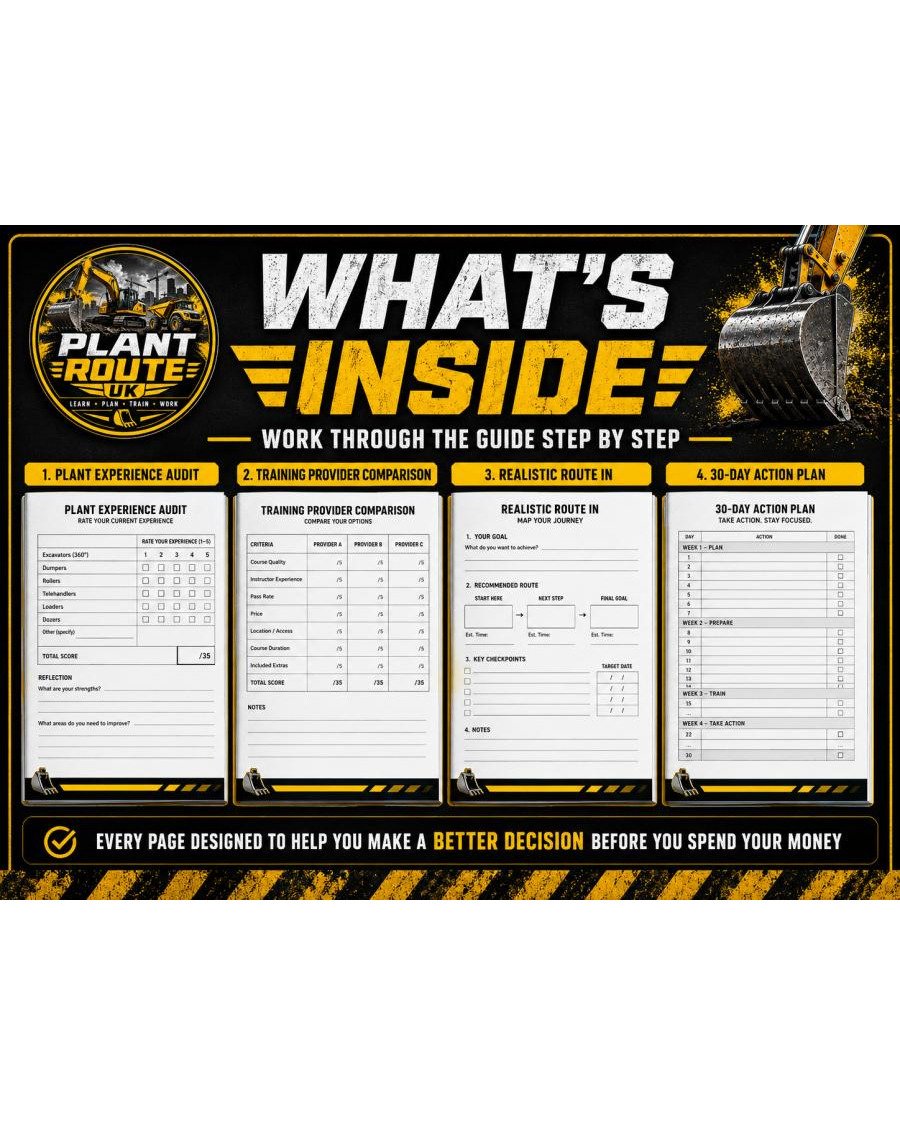
Our guides provide practical guidance on what matters in HGV training before you spend money on a course, covering real requirements, common pitfalls, and what to expect from providers so you can make an informed choice.
Conclusion
Common mistakes in HGV training are preventable. Most candidates fail not because they can't drive an HGV, but because they haven't prepared for what examiners assess.
Understanding these mistakes gives you a real advantage: you can focus training on the areas that matter and avoid wasting time on things that won't affect your result.
Choosing the right training provider matters enormously. Look for strong pass rates, experienced instructors, and a focus on safe driving, not just passing the test.
Frequently Asked Questions
What are the most common reasons for failing an HGV driving test?
The most common reasons for HGV test failure are poor observation and mirror checks, incorrect reversing technique, and speed management errors. Many candidates also lose marks for failing to position the vehicle correctly on roundabouts or not checking blind spots. Examiners look for consistent safe practice throughout the test, so a single serious error in any area can result in failure. Most candidates who fail can pass on their second or third attempt once they've identified and practised the specific weakness.
How can I improve my reversing during HGV training?
Reversing improves fastest through repetition in controlled environments. Start with straight-line reversing in empty bays, then progress to angled and tight-space reversals. Use reference points on the vehicle and ground to judge distance, and always use mirrors and spot checks. Many trainees benefit from practising the same manoeuvre 10-15 times in one session rather than moving on too quickly. Ask your trainer to explain what you're doing right as much as what needs improvement, and record your progress to build confidence before test day.
Can you fail an HGV test for poor observation?
Yes, poor observation is one of the most common reasons for HGV test failure. Examiners expect consistent mirror checks, shoulder checks, and awareness of blind spots throughout the entire test. Failing to observe before changing lanes, turning, or reversing is marked as a serious or critical fault. Even if your driving is otherwise smooth, inadequate observation puts you and others at risk, so examiners take it very seriously. Regular practice with your trainer focusing on observation habits will improve your chances significantly.
What should I look for in an HGV training provider?
Choose a provider with current DVSA (Driver and Vehicle Standards Agency) approval and instructors who hold valid HGV instructor qualifications. Ask how many hours of practical training are included, whether they offer mock tests, and what their pass rate is. Check that they cover both the theory and the practical skills you'll need on the job, not just test technique. Read reviews from recent candidates, and ask whether they provide support after you've passed your test. Be wary of providers who promise guaranteed passes or unusually low prices, as quality training takes time and investment.
Ready to understand your path into HGV driving? The Plant Industry Starter Guide breaks down training requirements, realistic costs, and what to expect from your first day on the job. Get practical insights that help you decide if this career is right for you, before you invest in a course. Access the Plant Industry Starter Guide