 ultimate-guide
Comprehensive Plant Machinery Career Guide: 2026
Table of Contents
- Is a Plant Machinery Career Right for You?
- How to Become a Plant Operator
- Plant Operator Qualifications and Tickets You Need
- Plant Operator Training Courses: What to Expect
- Plant Operator Working Conditions and What the Job Demands
- Realistic Salary, Job Prospects and Career Progression
- Why This Comprehensive Plant Machinery Career Guide Stands Out
- Conclusion
- Frequently Asked Questions
Last Updated: October 11, 2026
Is a Plant Machinery Career Right for You?
A plant machinery career offers genuine earning potential and job security in a sector that's always in demand. But it's not for everyone, and understanding what the role actually demands before you invest time and money is crucial. The work is physically demanding, often outdoors in poor weather, and requires you to operate equipment worth hundreds of thousands of pounds with precision and safety discipline. If you're considering a transition from office or retail work, this comprehensive plant machinery career guide will help you assess whether this path suits your circumstances and temperament.
Plant machinery operators work across construction, demolition, quarrying, and civil engineering projects. The role demands focus, physical stamina, and a genuine commitment to safety protocols. Many people discover this career after hitting a ceiling in their previous role, they're looking for better pay, more autonomy, or work that feels tangible. That motivation matters, because the training investment and licensing requirements are real. Before you spend money on courses or operator tickets, you need honest answers about what the job actually involves and whether you're suited to it.
Our comprehensive plant machinery career guide cuts through the sales pitches from training providers and gives you the reality: what qualifications you genuinely need, what the work environment is actually like, realistic salary expectations, and how to avoid expensive mistakes when choosing your training route.
How to Become a Plant Operator
Becoming a plant operator in the UK follows a clear pathway, though the exact steps depend on which machines you want to operate. The fastest route is to start with basic operator training and then pursue industry-recognised qualifications.
Your first step is to identify which plant machinery you want to operate. Excavators, dumpers, and telehandlers are common entry points because they're in constant demand and relatively straightforward to learn compared to specialist equipment like cranes or piling rigs. Once you've chosen your machine, you'll enrol in a training course with an approved training provider.
After training, you'll sit a practical and theoretical test with an examiner from CPCS or NPORS. Pass the test and you receive your ticket, a wallet-sized card that proves you're competent to operate that specific machine. Many operators start with one or two machines and gradually build their ticket portfolio over months or years, adding excavators, dumpers, or wheeled loaders as opportunities arise.
The cost of training varies depending on the machine and provider, so it's worth shopping around and understanding what's included before committing. Some employers will sponsor training for operators they want to hire, which can reduce your upfront cost significantly. This is particularly true if you're already working in the construction industry in another role.
Plant Operator Qualifications and Tickets You Need
The two main qualification systems in the UK are CPCS and NPORS, and both are widely recognised by employers. CPCS is slightly more common on larger construction sites and major projects, whilst NPORS is equally respected and sometimes preferred by smaller contractors and specialist operators.
A CPCS ticket is valid for two years and requires you to pass both a written exam and a practical demonstration. The practical test involves operating the machine safely, performing routine checks, and responding appropriately to scenarios presented by the examiner.
NPORS follows a similar structure but uses a different assessment process. Your NPORS ticket is also valid for two years and requires you to demonstrate competence in both theory and practical operation. Many operators hold cards from both schemes because they've worked for different employers or taken additional training over time.
Beyond CPCS and NPORS, you may need other qualifications depending on the role and employer. A Temporary Traffic Regulation Order (TTRO) ticket is essential if you'll be operating machinery on public roads or working near traffic. These are separate from your plant machinery ticket but complement it.
If you aspire to operate cranes or specialist equipment, you'll need additional qualifications beyond basic CPCS or NPORS. Crane operation, for example, requires a separate Slinger and Signaller ticket as well as the machine-specific ticket.
Plant Operator Training Courses: What to Expect
Training courses for plant machinery are intensive and practical. Most courses run Monday to Friday and combine classroom learning with hands-on machine operation. On day one, you'll cover health and safety, site procedures, and machine controls in a classroom setting.
The practical element is where the course becomes real. You'll operate the machine in a controlled environment, usually a training ground or quarry, where the trainer can watch you and correct your technique. You'll learn pre-operation checks, how to position the machine safely, how to handle loads or materials, and how to respond to different site conditions.
By the end of the week, you'll be ready for your assessment. The examiner will watch you operate the machine, ask you questions about safety and procedures, and test your knowledge in a written exam. If you pass, you'll receive your ticket within a few weeks. If you don't pass on the first attempt, most providers offer a resit, though you may need to pay an additional fee.
The quality of training varies between providers. Some offer large group courses with minimal one-to-one attention, whilst others provide smaller groups and more personalised feedback. Larger providers often have better facilities and more machines available, but smaller training centres sometimes offer more flexible scheduling or specialist expertise.
Plant Operator Working Conditions and What the Job Demands
Plant operators work on construction sites, quarries, demolition projects, and civil engineering sites. The environment is often noisy, dusty, and exposed to the elements. You'll be operating machinery in rain, wind, and sometimes extreme heat or cold.
Safety is non-negotiable. You'll wear personal protective equipment (PPE) including hard hat, high-visibility clothing, steel-toe-capped boots, and sometimes ear protection or respiratory protection depending on the site conditions.
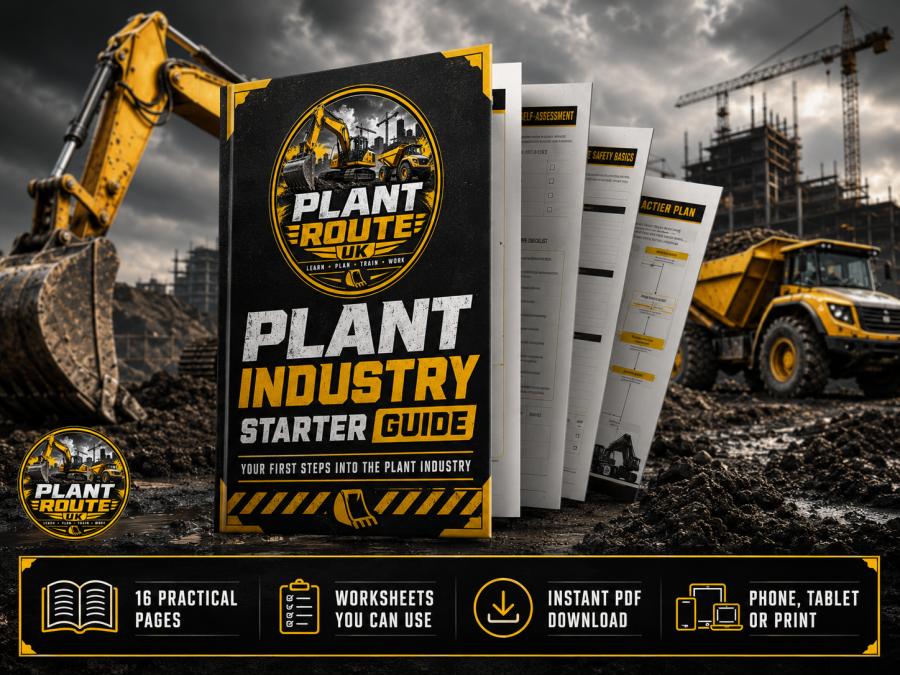
Get the Plant Industry Starter Guide →
The work is physically demanding in ways that office work isn't. You'll be concentrating intensely for hours whilst operating machinery that requires precision and quick reactions. You'll be responsible for loads or materials worth thousands of pounds and for the safety of workers around you.
Many operators work long hours during busy periods. A typical site day might be 7am to 5pm, but overtime is common during peak seasons. Some contracts offer shift work, including early starts or evening work.
The job suits people who are comfortable working independently, who take safety seriously, and who can handle the physical and mental demands of operating heavy machinery.
Realistic Salary, Job Prospects and Career Progression
Plant operators earn more than many entry-level trades, and the sector is consistently busy. A newly qualified operator typically earns between £25,000 and £35,000 per year, depending on location, employer size, and whether you're employed or self-employed. Experienced operators with multiple tickets and a good reputation earn £40,000 to £55,000 or more.
Job prospects are strong. The construction and civil engineering sectors are active across the UK, and there's a genuine shortage of experienced plant operators. Many sites struggle to find operators quickly, which works in your favour if you're reliable and competent.
Career progression typically happens in two ways. First, you build your ticket portfolio, adding excavators, dumpers, telehandlers, and other machines over time. Each additional ticket increases your market value and the range of jobs you can take. Second, you move into supervisory or management roles.
Self-employment is a realistic option once you have experience and a good reputation. Many operators work as self-employed contractors, hiring themselves out to agencies or directly to contractors. This offers higher hourly rates but requires you to manage your own admin, insurance, and downtime.
The catch-22 of experience is real: many employers want operators with site experience, but you can't get experience without a job. The way through this is to be flexible about your first role.
Why This Comprehensive Plant Machinery Career Guide Stands Out
There's no shortage of information about plant operator training online, but much of it comes from training providers trying to sell you a course or from generic career websites that don't understand the industry. This comprehensive plant machinery career guide is different because it's built on decades of hands-on experience in the sector, not marketing copy.
We focus on the questions that actually matter: Is this career right for you? What will you actually earn? What's the real working environment like? How much will training actually cost, and are there cheaper routes? Which tickets are worth getting first, and which ones can wait? What should you watch out for when choosing a training provider? These are the questions we answer honestly, because we've seen people waste money on the wrong training or discover too late that the work doesn't suit them.
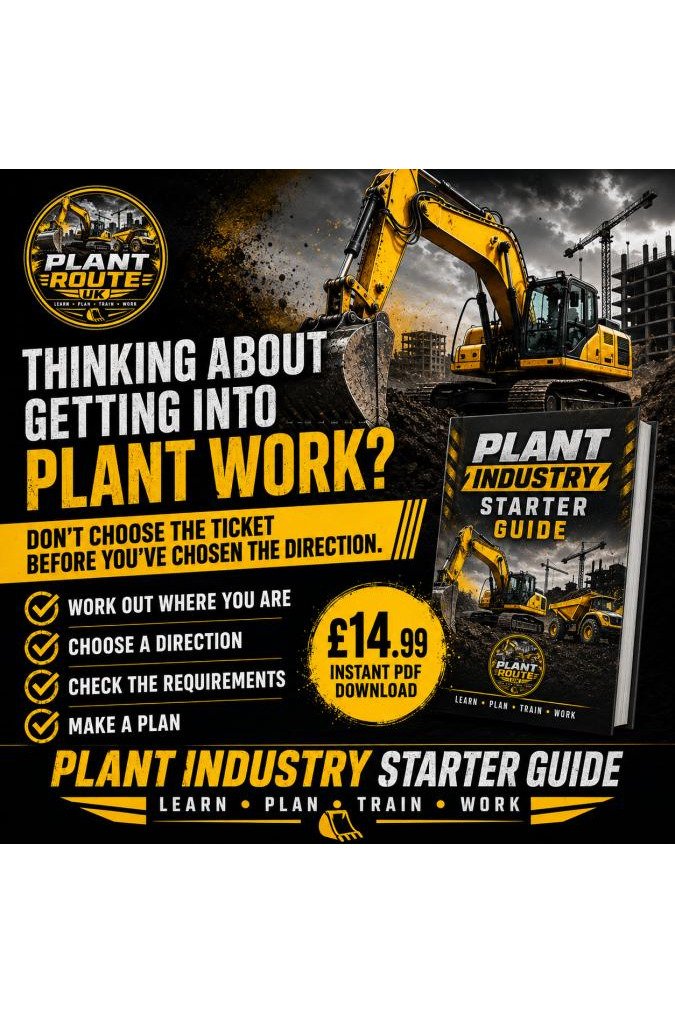
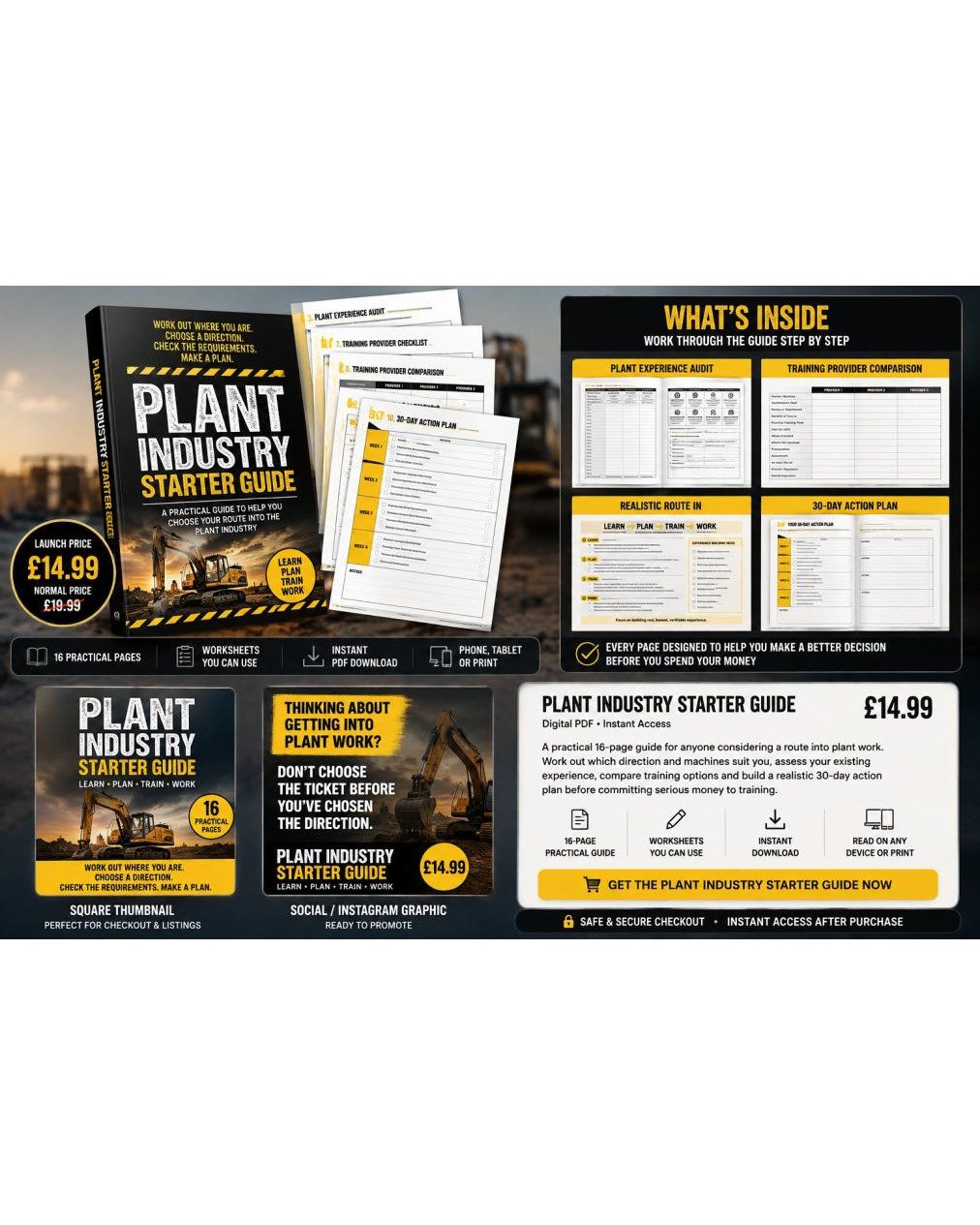
The Plant Industry Starter Guide cuts through the noise and gives you the reality. It explains which qualifications are essential and which are optional. It tells you what to expect in training and on site. It helps you understand the genuine earning potential and the realistic career paths. Most importantly, it helps you decide whether this career is right for you before you spend money and time on training.
Conclusion
A plant machinery career offers genuine opportunities for people willing to learn, work safely, and commit to the physical and mental demands of the job. The training pathway is clear, the demand for operators is strong, and earning potential is real. But success depends on making informed decisions from the start, choosing the right qualifications, finding quality training, and understanding what the work actually demands.
The Plant Industry Starter Guide provides exactly what you need to make those decisions confidently. Our guides cover training routes, realistic working conditions, genuine salary expectations, and how to avoid costly mistakes when entering the sector. Get the Plant Industry Starter Guide and start your transition into plant machinery with clarity and confidence.
Frequently Asked Questions
What qualifications do you need to become a plant operator?
You'll need a CPCS or NPORS card for the specific machinery you operate. Most entry-level roles require CSCS Health and Safety awareness certification, though formal GCSEs aren't mandatory. Your training provider will guide you through the required qualifications based on the plant machinery type you choose. Experience on site is valued as much as formal qualifications in this industry.
How long does plant operator training typically take?
Basic plant operator training courses usually take 5 to 10 days, though this varies by machinery type and your prior experience. CPCS or NPORS certification adds another 2 to 5 days for the test itself. Most people move from course completion to their first site role within 4 to 6 weeks, but realistic job-ready preparation takes longer when you factor in gaining site familiarity and understanding real working conditions.
Can you become a plant operator with no experience?
Yes. Plant operators don't need prior experience to start training. What matters more is your attitude to safety, willingness to learn, and physical fitness. Entry-level positions exist for people transitioning from office or retail work. However, understanding what the job actually involves before investing in training helps you avoid spending money on a career that isn't right for you.
What does a plant operator actually do day to day?
Plant operators move earth, materials and equipment on construction and industrial sites using machinery like excavators, bulldozers and telehandlers. Your day involves operating under supervision, following site rules, communicating with other workers, performing safety checks, and adapting to changing weather and ground conditions. It's physical, outdoor work with strict safety protocols and little downtime once you start a shift.
Is plant machinery operating a good long-term career?
Plant operating offers decent earning potential, job security during economic growth, and a clear path to supervisory or contract roles. However, it's physically demanding, weather-dependent, and requires ongoing training as machinery evolves. The career suits people who enjoy hands-on work, don't mind outdoor conditions, and want genuine job stability without needing a degree. It's not the right fit for everyone, which is why exploring it thoroughly before investing in training matters.