 ultimate-guide
What are plant machinery operator training requirements in 2026?
Last Updated: October 25, 2026
Quick Summary
Plant machinery operator training requires certification through either CPCS or NPORS, involving theory and practical assessments plus health and safety awareness evaluation. You'll need a valid card for specific machines, typically valid for five years, and most employers expect documented site experience before hiring.
- CPCS and NPORS are the two main certification pathways, each valid for five years with renewal required
- Certification involves three components: theory test, practical test, and health and safety awareness assessment
- Each machine category requires a separate card or endorsement; an excavator card does not cover telehandlers or rollers
- Most employers require documented site experience before hiring, even with a valid certification card
- Training costs vary significantly by provider and machine category; employer sponsorship or apprenticeship funding can reduce financial barriers
Table of Contents
- Plant machinery operator training requirements explained
- Plant operator qualifications: what you actually need
- CPCS plant operator card: how it works and why it matters
- NPORS plant operator training: the alternative pathway
- Plant operator training cost: what to budget and where to save
- The reality of getting hired after your training
- Starting your plant machinery operator journey
- Frequently Asked Questions
Plant machinery operator training requirements explained
What separates someone who lands a plant machinery operator role from someone who spends months applying without success? It's not luck.
Plant machinery operator training requirements have become increasingly specific over the past few years.
Plant Route UK draws on more than 30 years of hands-on experience to help people navigate this exact decision. Most candidates have looked at training costs, seen the price tag, and hesitated.
Here's what actually matters: plant machinery operators in the UK work within a regulated framework.
The training landscape itself has shifted. The Construction Industry Training Board (CITB) influences how training is structured (Durations and ratios confirmed for next phase of plant training standards).
Plant operator qualifications: what you actually need
A plant operator qualification isn't a single thing. It's a combination of certifications, experience, and sometimes additional endorsements depending on the specific machinery you'll operate.
The core qualification is a plant operator card. This comes in two forms: CPCS (Construction Plant Competency Scheme) or NPORS (National Plant Operators Registration Scheme). Both are industry-recognised.
Beyond the card itself, you'll need evidence that you can operate specific machines safely.
Experience requirements vary by employer and by role. Some sites will hire someone with a fresh card and provide on-site training.
Health and Safety awareness is another layer. You'll need to demonstrate knowledge of site safety protocols, emergency procedures, and hazard recognition. This isn't tested in isolation; it's woven through the practical assessments.
CPCS plant operator card: how it works and why it matters
The CPCS card is the more common pathway in the UK. It's the scheme most large construction sites recognise and often require. Understanding how it works removes a lot of confusion about what you're actually signing up for.
CPCS certification involves three components: a theory test, a practical test, and a health and safety awareness test. You can't skip any of these. The theory test covers machinery operation principles, safety regulations, and site procedures. The practical test puts you in a real machine and assesses whether you can actually operate it safely and competently.
The CPCS card itself is valid for five years. After that, you'll need to renew it. Renewal involves retesting in all three areas. This isn't a rubber-stamp process, you have to demonstrate continued competence.
Different machine categories require different cards. An excavator card won't cover a telehandler. A roller card is separate from a compactor card.
To understand how CPCS compares to the alternative pathway, CPCS vs NPORS Training Explained breaks down the key differences and helps you decide which route fits your situation. If you're already leaning toward CPCS, How to Pass CPCS Theory Test: Step-by-Step Guide covers the practical steps to prepare and pass the theory component.
CPCS certification requires you to pass three distinct components, each assessing different aspects of plant operation competence.
| Component | What it covers | Assessment type |
|---|---|---|
| Theory test | Machinery operation principles, safety regulations, site procedures | Written examination |
| Practical test | Safe and competent machine operation | Real machine assessment |
| Health and safety awareness | Site safety protocols, emergency procedures, hazard recognition | Embedded in practical evaluation |
| Card validity | Continued competence required | Five-year renewal cycle |
NPORS plant operator training: the alternative pathway
NPORS is the second major certification pathway in the UK. It's less common than CPCS on large construction sites, but it's recognised across the industry and some employers actively prefer it.
NPORS certification also involves theory and practical components, but the structure differs from CPCS. The NPORS test is often described as more flexible in terms of when and where you can take it.
NPORS cards are also valid for five years, so renewal cycles are similar (NPORS CSCS Competent Operator Card). The key difference is in how the industry perceives them. On some sites, NPORS is treated as equally valid. On others, particularly large national contractors, CPCS is the stated requirement. This isn't because NPORS is inferior, it's because standardisation simplifies site management. A large contractor with 500 operatives across multiple sites prefers everyone to hold the same certification scheme.
Your choice between CPCS and NPORS often depends on where you plan to work. If you're targeting large construction firms or major infrastructure projects, CPCS is the safer choice.
The practical reality is that NPORS is often easier to access if you're in a region without extensive CPCS training provision.
Plant operator training cost: what to budget and where to save
Training costs are one of the biggest barriers people face. Understanding what you're actually paying for helps you make realistic decisions about whether this pathway is right for you.
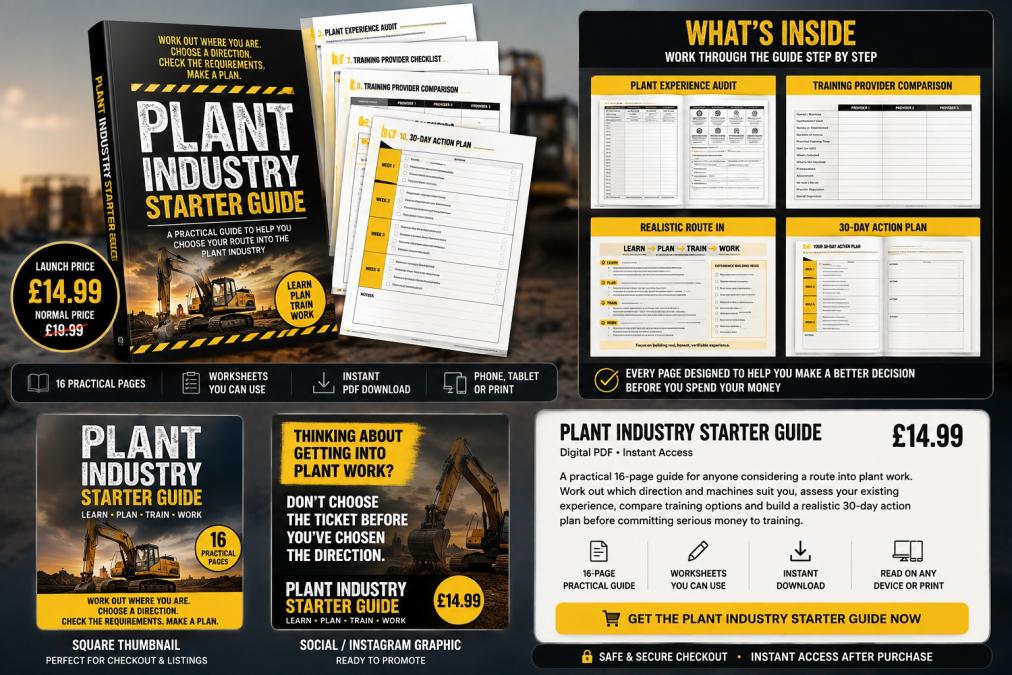
Get the Plant Industry Starter Guide →
A complete plant machinery operator training programme typically ranges across several components. Plant Training Costs: What You'll Actually Spend provides a detailed breakdown of the financial commitment required.
Some providers bundle everything together. Others charge separately for theory, practical, and assessment. Some include certification fees; others add them on top.
A common mistake is treating cost as the only factor. The cheapest training isn't always the best value.
Some candidates fund training through employer support. If you're already working in construction or plant hire, your employer may sponsor your certification. This significantly changes the financial equation.
The reality of getting hired after your training
This is where many candidates hit an unexpected wall. You've completed your training, passed your tests, and earned your certification. Now you need a job.
Employers have two competing concerns: they need competent operators, but they also want to minimise risk. A fresh operator with a new card represents an unknown quantity. You've proven you can operate the machine in a controlled test environment.
This is why experience requirements exist. Many employers won't hire someone with zero site experience, even with a valid card.
The catch-22 is real: you need experience to get hired, but you need a job to get experience. The way through this is understanding where entry-level opportunities actually exist.
For practical guidance on navigating this transition, Getting Plant Machinery Job Experience: A How-To Guide covers specific strategies that actually work for breaking into the industry after training.
Networking matters more than most candidates expect. Construction and plant machinery is still an industry where relationships matter.
Starting your plant machinery operator journey
If you're seriously considering plant machinery operator training, the decision point isn't about whether the training exists or whether jobs exist.
Many people find plant machinery operation genuinely rewarding. The work is tangible. You operate real machines that do real things. The pay is better than many office roles.
The training requirements themselves are straightforward. You need a CPCS or NPORS card for the machines you'll operate. You need to pass theory and practical assessments.
For a comprehensive walkthrough of the entire pathway from decision to employment, How to Become a Plant Machinery Operator: 2026 Guide covers the complete journey and helps you understand what's realistic for your situation.
The key is making an informed decision before you commit money and time.
Frequently Asked Questions
Do you need a licence to operate plant machinery in the UK?
Yes. Most plant machinery on construction sites requires formal qualifications. You cannot legally operate equipment like diggers, telehandlers, or dumpers without a valid operator card (CPCS or NPORS) or a Category C1 driving licence for certain smaller machines. Your employer is responsible for ensuring you hold the correct certification before you touch any equipment. Operating without the right qualification puts you, your team, and your employer at legal and safety risk.
What is the difference between CPCS and NPORS plant operator cards?
Both CPCS and NPORS are recognised plant operator qualifications, but they differ slightly in structure and industry acceptance. CPCS (Construction Plant Competency Scheme) is the most widely recognised across major construction sites and is often preferred by larger contractors. NPORS (National Plant Operators Registration Scheme) is also valid and sometimes preferred by smaller firms or specific sectors. Both require training, a theory test, and a practical assessment. CPCS cards are typically valid for five years; NPORS cards are also valid for a set period. Check with your target employers which they prefer before choosing your route.
How long does plant operator training take?
Training duration varies. Most CPCS and NPORS courses run from five to ten days of full-time training, depending on the machine type and your prior experience. After classroom and practical training, you'll sit a theory test and a practical assessment on the same day or shortly after. If you pass both, you can apply for your card immediately. Some people complete training and testing within a week; others take longer if they need to retake the practical. Expect at least two to four weeks from course booking to holding your card in hand.
What qualifications do you need to operate plant machinery?
You need a valid plant operator card (CPCS or NPORS) for the specific machine type you'll operate. Before enrolling on a training course, you'll typically need to be at least 18 years old, hold a valid driving licence (not always mandatory, but often expected), and have basic literacy and numeracy. Some training providers require a health declaration or fitness-to-work assessment. You don't need prior construction experience, but being physically fit and comfortable working at height or in confined spaces helps. Your training provider will advise on any specific entry requirements when you apply.
Can you operate plant machinery without experience?
No. You cannot legally operate plant machinery without formal training and a valid operator card, regardless of how much informal or on-site experience you claim to have. Training courses are designed for beginners and do not assume any prior knowledge. You'll learn machinery controls, safety procedures, and site awareness from scratch. However, having construction site experience (even in non-operator roles) can help you understand site culture and hazards, making the training easier to absorb. First-time operators complete training and gain their card before stepping into any operator role.
How much does plant machinery operator training cost?
Training costs vary depending on the machine type, training provider, and course length. Some providers offer discounts if you book multiple machines or bundle courses. Your card application fee is separate. Travel, accommodation, and exam resits (if needed) add to the total. Many training providers offer payment plans or employer sponsorship. Contact training providers directly for current pricing, as costs vary by location and demand. Your investment in getting multiple cards can open more job opportunities.
Do plant operator qualifications expire?
Yes. CPCS cards are valid for five years, while NPORS cards are valid for a set period. Before your card expires, you can renew it by taking a refresher course and passing a reassessment, or you can apply for a new card through a full course. Some employers require you to renew before your card expires; others will accept a card that has expired if you're actively working. Expired cards are not valid for operating machinery on any site. Keep track of your expiry date and plan your renewal well in advance to avoid gaps in employment.
Is plant machinery operator training worth the investment if I'm unsure about the career?
That depends on your situation. If you're genuinely uncertain, investing upfront is a real risk. However, many people find that understanding the real job requirements, salary expectations, and working conditions before spending money helps them make a confident decision. Research what the role actually involves: shift patterns, site conditions, physical demands, and typical pay in your area. Talk to current operators. Some training providers offer taster sessions or online introductions. Consider starting with one machine type rather than multiple cards, which reduces your initial outlay while you test the waters. A practical guide covering realistic job prospects, working conditions, and honest salary data can help you decide before committing to expensive training.
Plant machinery operation is a genuine career path, but it's not a shortcut to employment. It requires real training, real commitment, and realistic expectations about what comes after certification. The Plant Industry Starter Guide helps you understand exactly what you're getting into before you invest, so you can make a decision you won't regret.