 ultimate-guide
How to Become a Plant Machinery Operator: 2026 Guide
Table of Contents
- What Does a Plant Machinery Operator Actually Do?
- Qualifications and Training: What You Need Before You Start
- CPCS vs NPORS Card: Which One Should You Get?
- Plant Operator Training Duration: How Long Until You're Qualified?
- Plant Machinery Operator Working Conditions: What the Job Is Really Like
- How to Get Your First Job as a Plant Machinery Operator
- Frequently Asked Questions
Last Updated: September 16, 2026
What Does a Plant Machinery Operator Actually Do?
Learning how to become a plant machinery operator starts with understanding the daily reality of the role. A plant machinery operator is a trained worker who controls heavy construction equipment such as excavators, bulldozers, dumpers and telehandlers to move earth, lift materials and shape ground on building and civil engineering sites. This guide from Plant Industry Starter Guide draws on more than 30 years of hands-on industry experience to walk you through training, cards, costs and realistic career expectations before you spend a penny on courses.
Most days involve more than pulling levers. You'll complete pre-start checks, grease moving parts, watch for buried services, and work to a banksman's signals while keeping one eye on pedestrians and other machines.
Types of Plant Machinery You Could Operate
The machines you end up running shape the pay, the sites and the hours. Common categories include:
- 360-degree excavators: digging trenches, foundations and drainage, from 1.5-tonne minis to 30-tonne tracked machines
- Dumpers and site dumpers: moving spoil and aggregates around tight sites
- Telehandlers: lifting pallets and materials to height, common on housing developments
- Ride-on rollers and compactors: preparing sub-base for roads and car parks
- Dozers and loading shovels: bulk earthmoving on larger civils projects
Qualifications and Training: What You Need Before You Start
There is no single academic qualification required to operate plant machinery, but you do need the right training and a recognised competence card before most sites will let you near a machine. In practice, the route looks like this:
- Complete a CITB Health, Safety and Environment (HS&E) test at an approved centre
- Book a novice operator course with an accredited training provider for your chosen machine category
- Pass the practical and theory assessments to gain your card
- Keep your card renewed through ongoing tests and, where required, recorded experience
The Health and Safety Executive sets the framework employers must follow for construction site safety, and competence cards are how sites evidence that operators meet it. You can read the regulator's own guidance via the HSE construction site safety guidance.
Do You Need a CSCS Card to Operate Plant Machinery?
A CSCS card alone does not qualify you to operate plant. CSCS cards prove general site health and safety awareness, while plant operating competence is evidenced by a separate operator card such as CPCS or NPORS. Many sites require both: a CSCS card to get through the gate and an operator card to run the machine.
CPCS vs NPORS Card: Which One Should You Get?
The CPCS vs NPORS card question comes up in almost every conversation with new operators. Both prove competence, but they differ in recognition and flexibility.
| Card | Recognised By | Best For | Renewal |
|---|---|---|---|
| CPCS | Most major contractors and principal contractors | Large civils and infrastructure sites | Renewal test every 5 years |
| NPORS | Many contractors, plus some sectors outside construction | Smaller firms, agriculture, rail and specialist work | Renewal typically every 3-5 years |
CPCS tends to carry more weight on big infrastructure projects because principal contractors often insist on it. NPORS is often cheaper and faster to arrange, and it's widely accepted on smaller sites. If you're unsure, ask local employers which card they actually check before you book.
Plant Operator Training Duration: How Long Until You're Qualified?
Most novice courses for a single machine category run for around one to two weeks, depending on the machine and the provider. A mini excavator course is usually shorter than a 360-degree tracked excavator course, and experienced operators adding a new category can often complete a shorter conversion course.
Realistically, budget several weeks from your first enquiry to holding a card in your hand, allowing for test dates, course availability and any resits. After that, genuine competence takes months of site time.
A common mistake is treating the card as the finish line. It isn't. The first few months on site teach you more about ground conditions, services and safe working than any classroom ever will.
Plant Machinery Operator Working Conditions: What the Job Is Really Like
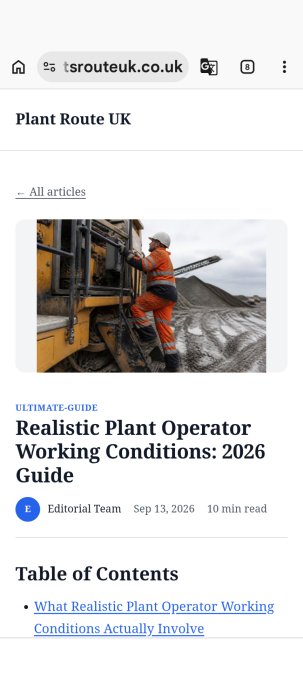
Plant machinery operator working conditions vary enormously by sector and machine. Expect long days, often starting before 7am, with outdoor work in rain, cold and dust. Cabbed machines offer heating, air conditioning and reduced noise, but you'll still spend hours seated, watching mirrors and managing fatigue.
Get the Plant Industry Starter Guide →
Pay is typically hourly and rises with machine size, card type and experience. Rates also shift with demand, so it's worth checking current advertised rates on job boards rather than relying on old figures.
The trade-off is real: good money and steady work on one side, early starts, weather and site politics on the other. If you dislike being outdoors or working to someone else's timetable, this isn't the career for you.
How to Get Your First Job as a Plant Machinery Operator
The experience catch-22 is the biggest hurdle new operators face. Employers want site time; you can't get site time without a job. Breaking it down:
- Register with two or three plant hire companies as a trainee or dumper operator
- Take labouring or groundworks work to get on site and learn the environment
- Ask your site manager to let you shadow an experienced operator during quiet periods
- Keep a written log of every machine you've touched, with dates and hours
- Apply to smaller contractors first, where the gatekeeping is less rigid
Groundwork and labouring roles are the most reliable entry point. They get you on site, build relationships and often lead to a machine seat when a regular operator is off. For official careers information and apprenticeship routes, see the National Careers Service job profile for plant operators.
The path into plant operating is clearer than most people think, but it isn't cheap or instant, and too many new entrants spend money on the wrong card for the sites they actually want to work on. Plant Industry Starter Guide exists to close that gap: practical digital guides covering training routes, CPCS and NPORS requirements, machinery types and realistic working conditions, built from more than 30 years of hands-on experience. If you want to understand the job before you commit to a course, get the Plant Industry Starter Guide and start your training decisions from a position of knowledge rather than guesswork.
Frequently Asked Questions
What qualifications do I need to be a plant operator?
You need a valid operator card for the specific machinery you'll be using. The two main routes are CPCS and NPORS. Both require you to pass a theory test and a practical assessment. You'll also need a CSCS card to access most construction sites. Some employers ask for a full driving licence because you may need to travel between sites. There's no minimum academic requirement, but basic maths and English help with the theory tests.
How long does it take to get a CPCS card?
The CPCS process typically takes two to four weeks from booking to receiving your card. You'll complete a theory test, then a practical test on the specific machine category. If you're new to operating, you'll likely need training first, which adds one to two weeks depending on the machinery. Experienced operators who just need certification can often complete the whole process in under a fortnight.
Is being a plant machinery operator a good career?
For many people, yes. Plant machinery operator working conditions vary by site and employer, but the role offers steady demand across construction, demolition, and infrastructure projects. Pay rises with experience and additional machine categories. You can progress to site supervisor or move into specialist machinery. The main trade-offs are long shifts, outdoor work in all weather, and travel between sites. If you enjoy practical work and don't mind those conditions, it's a solid career.
What is the difference between CPCS and NPORS?
CPCS is the Construction Plant Competence Scheme, run by CITB. NPORS is the National Plant Operators Registration Scheme. Both are recognised across the industry. CPCS cards are more widely requested on large construction sites, while NPORS is often accepted on smaller projects and offers more flexibility in training providers. Some employers prefer one over the other. Check what your target employers ask for before booking your training.
Do I need a CSCS card to operate plant machinery?
Most construction sites require a CSCS card for site access, even if you already hold a CPCS or NPORS operator card. The CSCS card proves you've passed the health, safety, and environment test. You can apply for a CSCS card once you've passed that test. Some sites accept the CPCS card alone, but having both avoids delays and widens your job options.
How much does plant operator training cost?
Training costs vary depending on the machinery category, the training provider, and whether you're doing a novice or experienced course. Pricing depends on location, course length, and whether test fees are included. Some providers offer packages that bundle training and testing. It's worth comparing quotes from several providers and checking whether the price includes the CPCS or NPORS test fee, which is often charged separately.