 how-to
How to Prepare for Your HGV Medical: A Step-by-Step Guide
Table of Contents
- Understanding the HGV Medical Requirements
- What to Bring to an HGV Medical
- HGV Medical Eyesight Requirements and Vision Standards
- How Long Does an HGV Medical Take: Timeline and Duration
- What to Expect During Your HGV D4 Medical Examination
- Preparation Checklist and Final Steps Before Your Appointment
- Common Mistakes to Avoid When Preparing for Your HGV Medical
- Frequently Asked Questions
Last Updated: October 18, 2026
Understanding the HGV Medical Requirements
An HGV medical is a mandatory health assessment that anyone applying for or renewing a Heavy Goods Vehicle driving licence must pass. The test checks whether you're fit to operate large vehicles safely on public roads. This isn't optional, it's a legal requirement set by the Driver and Vehicle Licensing Agency (DVLA).
The examination focuses on your physical and mental fitness to drive. The DVLA has strict standards about vision, hearing, cardiovascular health, and neurological function. If you fail any part, you won't get your licence. Understanding what they're testing for helps you prepare properly and avoid wasting time or money on unnecessary appointments.
Most people underestimate how thorough the HGV medical preparation process needs to be. You can't just turn up and hope for the best. The test has specific pass/fail criteria, and even minor issues, like uncorrected vision or untreated high blood pressure, can result in rejection.
The good news: if you know what to expect and prepare accordingly, the vast majority of applicants pass first time.
What to Bring to an HGV Medical
Bring the right documents, and the appointment runs smoothly. Bring the wrong ones, and you'll waste time or face delays.
Essential documents you must bring:
- Your DVLA photocard driving licence (or paper licence if you hold one)
- Proof of address (utility bill, council tax letter, or bank statement dated within the last three months)
- Your medical history records (if you have any ongoing conditions)
- A list of all medications you're currently taking
- Your glasses or contact lenses (if you use them for driving)
- Your appointment confirmation letter
Many applicants forget their proof of address. The clinic won't proceed without it. If you've moved recently, get a utility bill or council tax letter before your appointment, don't rely on memory or assume the clinic will accept verbal confirmation.
Bring any medical reports or letters from specialists if you've had recent treatment or investigations. If you've had heart problems, diabetes, or neurological conditions, bring documentation. The clinic may already have some of this on file, but having it with you speeds up the process.
Don't bring unnecessary items. The clinic doesn't need your full medical history from childhood, your vaccination record, or documents unrelated to your current health. Stick to what's relevant to driving fitness.
HGV Medical Eyesight Requirements and Vision Standards
Vision is one of the most common reasons people fail their HGV medical. The standards are strict because poor eyesight directly affects safety on motorways and in heavy traffic.
The minimum vision standard:
You must have visual acuity of at least 6/7.5 in each eye, measured with the Snellen chart. If you need glasses or contact lenses to achieve this, that's fine, you just need to wear them while driving. The key is that corrected vision must meet the standard.
You also need a visual field of at least 120 degrees horizontally. This means your peripheral vision, what you can see to the sides without moving your head, must be adequate. People with certain eye conditions, like advanced glaucoma or retinal damage, may fail this part even if their central vision is good.
Colour blindness doesn't automatically disqualify you, but you must be able to recognise traffic lights reliably. The doctor will test this during your medical.
What happens if you wear glasses:
Bring your current prescription glasses or contact lenses. The doctor will test your vision with them on. If your prescription has changed since your last driving licence application, you might need an up-to-date eye test from an optician first. Don't wait until the medical appointment to discover your prescription is outdated, get your eyes tested beforehand.
Contact lens wearers should bring both lenses and glasses as a backup. Some people find contact lenses uncomfortable during the medical examination, so having glasses available helps.
How Long Does an HGV Medical Take: Timeline and Duration
Most HGV medical appointments last between 30 and 45 minutes from start to finish. The actual examination usually takes 20 to 30 minutes, with the remaining time spent on paperwork and explanations.
The typical appointment breakdown:
- Check-in and paperwork: 5-10 minutes
- Initial health questionnaire: 5 minutes
- Physical examination: 10-15 minutes
- Vision and hearing tests: 5-10 minutes
- Blood pressure and other measurements: 5 minutes
- Doctor's review and decision: 5-10 minutes
You should allow extra time for travel and waiting. Arrive 10 to 15 minutes early. Some clinics run on schedule, others don't. If you're running late, contact the clinic immediately, they may reschedule you rather than rush through the examination.
The entire process from booking to receiving your medical certificate usually takes 2 to 4 weeks, depending on clinic availability. Some private clinics offer faster appointments than NHS services, though you'll pay a fee.
What to Expect During Your HGV D4 Medical Examination
The HGV D4 medical (the official name for the HGV medical examination) follows a structured format. Knowing what happens at each stage removes anxiety and helps you prepare mentally.

The examination sequence:
The doctor starts by reviewing your medical history. They'll ask about past illnesses, operations, medications, and any conditions affecting your health. Be honest, this isn't a test you can fail by admission.
Next comes the physical examination. The doctor checks your heart rate, blood pressure, and general fitness. For HGV driving, they need to confirm you can safely operate the vehicle controls and respond quickly to emergencies.
Vision testing happens using a Snellen chart. You'll read letters at a set distance. The doctor then tests your peripheral vision and colour recognition.
The doctor may ask you to perform simple coordination tests. You might be asked to touch your nose, walk in a straight line, or demonstrate balance.
Blood pressure is measured, and you may be asked about your diet, exercise, and stress levels. If your blood pressure is elevated, the doctor might retest it after a few minutes of rest.
Finally, the doctor reviews everything and makes a decision. If you pass, you'll receive your medical certificate immediately.
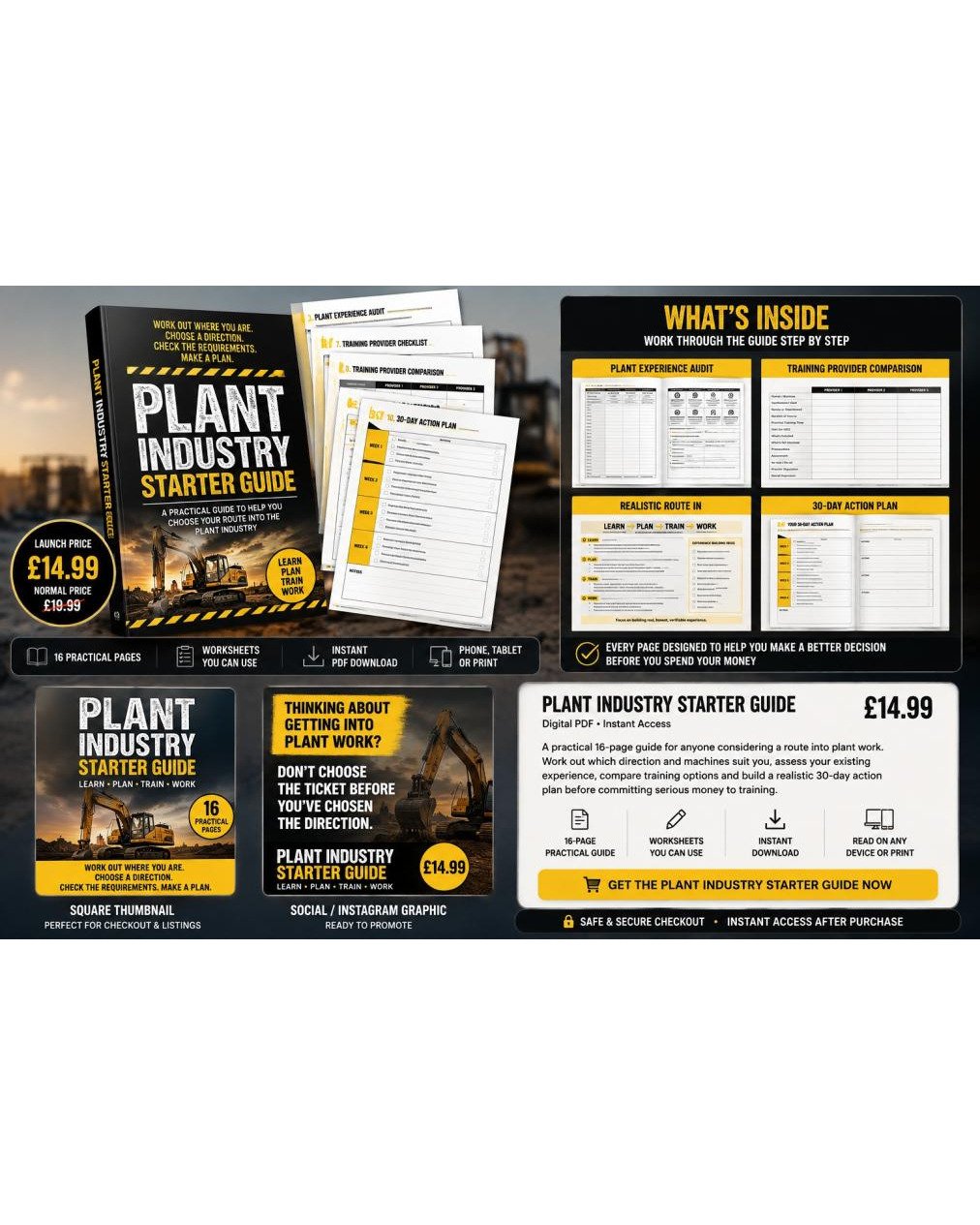
Get the Plant Industry Starter Guide →
Preparation Checklist and Final Steps Before Your Appointment
Use this checklist to ensure you're fully prepared for your HGV medical preparation appointment.
One week before your appointment:
- Confirm your appointment date and time with the clinic
- Check the clinic's location and plan your travel route
- Gather all required documents (licence, proof of address, medical records)
- Get an up-to-date eye test if your glasses prescription is over a year old
- List all medications and supplements you take
- Note any medical conditions or recent health issues
Three days before:
- Check your blood pressure if you have a home monitor (high stress before the appointment can elevate it)
- Ensure your glasses or contact lenses are clean and in good condition
- Get adequate sleep, fatigue can affect your performance in tests
- Avoid heavy alcohol consumption the night before
The morning of your appointment:
- Eat a light breakfast, don't arrive hungry or overfed
- Take any regular medications as normal
- Wear comfortable, loose clothing that allows easy access to your arms for blood pressure testing
- Arrive 10-15 minutes early
- Bring all required documents in a folder or envelope
After your appointment:
If you pass, your medical certificate will be issued immediately. Keep it safe, you'll need it when you apply to the DVLA for your HGV licence.
If the doctor needs further information or refers you to a specialist, follow their instructions carefully. Don't delay in booking follow-up appointments. The sooner you resolve any issues, the sooner you can reapply for your medical.
Common Mistakes to Avoid When Preparing for Your HGV Medical
Many candidates sabotage their own chances by making preventable errors. Knowing what not to do is just as important as knowing what to do.
Mistake 1: Not getting your eyes tested beforehand
Your prescription might have changed since your last eye test. If you turn up wearing an outdated prescription, you might fail the vision test despite having correctable eyesight.
Mistake 2: Skipping breakfast or eating too much
Arriving hungry affects your concentration and can make you feel faint during blood pressure testing. Eating a huge meal makes you feel sluggish and bloated.
Mistake 3: Taking new medications before the appointment
If you've recently started a new medication, discuss it with your doctor during the medical. Don't assume it will disqualify you. Many common medications are fine for HGV drivers.
Mistake 4: Forgetting proof of address
This is surprisingly common and causes unnecessary delays. A utility bill or council tax letter dated within three months is essential.
Mistake 5: Not disclosing health conditions
The medical form asks detailed questions about your health history. Some people omit information thinking it will disqualify them. In reality, many conditions don't prevent you from driving, but dishonesty does.
Mistake 6: Arriving late or in a rush
Stress raises blood pressure and affects your performance in tests. Arriving rushed means you can't settle your nerves.
Mistake 7: Wearing clothes that make testing difficult
Tight sleeves make it hard for the doctor to take your blood pressure. Avoid tight shirts or jumpers. Wear something loose that rolls up easily.
Preparing for your HGV medical doesn't require special training or expensive preparation courses. It requires organisation, honesty, and understanding what the doctor is looking for.
At Plant Industry Starter Guide, we help people entering the HGV and plant machinery industries understand exactly what's required before they invest time and money in training. If you're considering an HGV career and want realistic guidance on what to expect, the Plant Industry Starter Guide covers the complete picture.
Frequently Asked Questions
What should I bring to an HGV medical?
Bring your DVLA photocard driving licence, passport or other valid photo ID, completed medical form (D4 or D4/D), and a list of any medications you take. Wear comfortable clothing and bring your glasses or contact lenses if you normally use them for driving. If you have recent medical test results or letters from your GP, these can be helpful. Arrive 10-15 minutes early to allow time for check-in and paperwork completion.
Can I pass an HGV medical if I wear glasses?
Yes, you can pass an HGV medical while wearing glasses or contact lenses. Your eyesight must meet the required standard of 6/7.5 or better with correction if needed. The examiner will test your vision both with and without correction. As long as your corrected vision meets the standard and you declare your glasses use on your medical form, wearing them will not prevent you from passing. Ensure your prescription is current before your appointment.
How long does an HGV medical take?
A typical HGV medical takes between 20 and 45 minutes, though this can vary depending on your medical history and whether the examiner needs to conduct additional checks. The appointment includes vision and hearing tests, blood pressure measurement, and a general health review. Allow extra time for arrival, check-in, and paperwork, so plan for around one hour total at the clinic. If you have complex medical conditions, the appointment may take longer.
What medical conditions can affect an HGV licence?
Conditions affecting your HGV medical include uncontrolled diabetes, epilepsy or recent seizures, serious heart conditions, untreated sleep apnoea, and severe mental health conditions. Vision problems (including uncorrected myopia), hearing loss, and certain neurological disorders can also impact your eligibility. High blood pressure, if unmedicated, may result in failure. Many conditions don't automatically disqualify you, the key is whether they're managed and stable. Declare all conditions honestly on your medical form; the examiner will advise whether you meet the standard.