 how-to
How to Pass CPCS Theory Test: Step-by-Step Guide
Table of Contents
- What You Need to Know Before Starting
- Understanding CPCS Theory Test Duration and Format
- Creating Your CPCS Theory Test Revision Strategy
- Working Through CPCS Theory Test Questions and Answers
- Using a CPCS Mock Test to Measure Progress
- Common Mistakes to Avoid on Test Day
- Your Final Week: Last-Minute Preparation Tips
- What Happens If You Don't Pass
- Frequently Asked Questions
Last Updated: October 13, 2026
What You Need to Know Before Starting
Passing the CPCS theory test is a crucial step if you're entering the plant machinery operating industry. This test assesses your knowledge of safety, machinery operation, and workplace procedures before you can operate plant equipment on site.
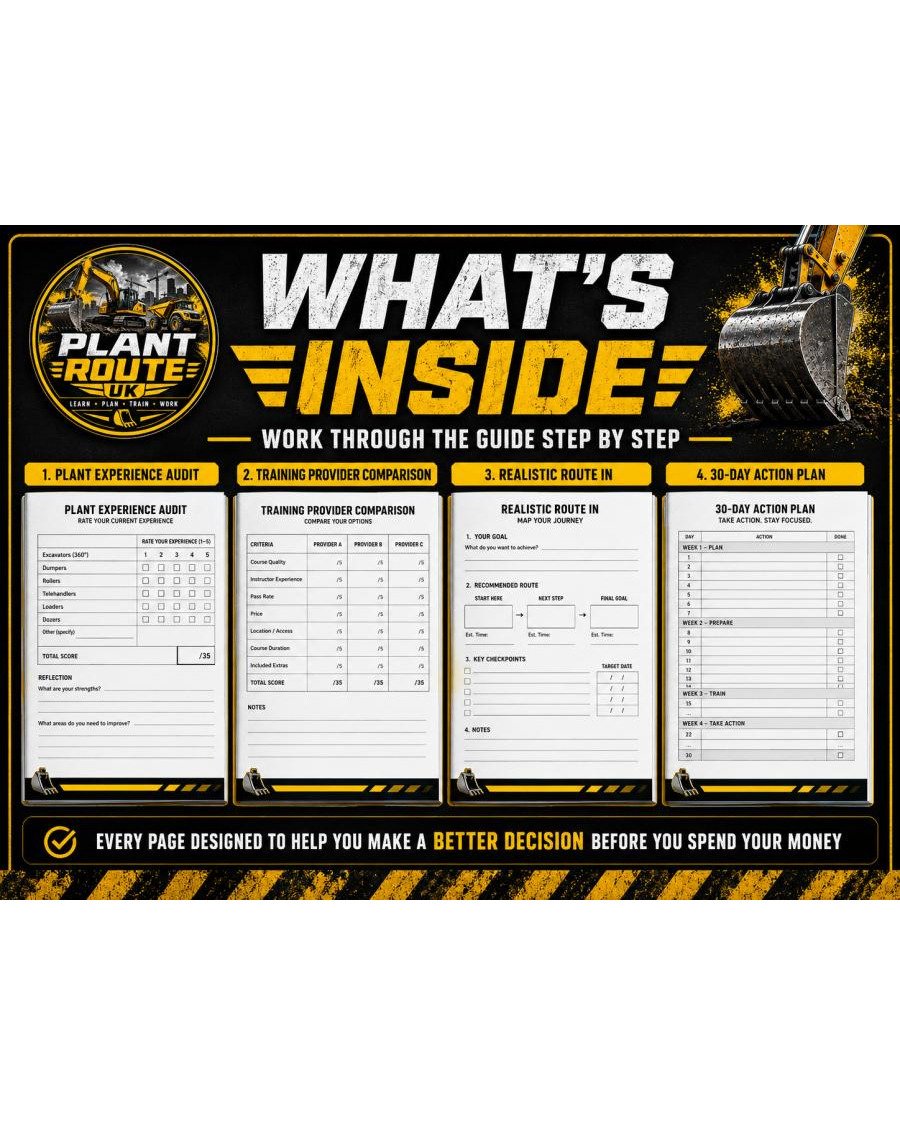
The Plant Industry Starter Guide helps beginners understand training, licences, machinery, working conditions and realistic career options before spending money on courses or operator tickets. The test itself isn't designed to trick you, it's designed to ensure you know the basics that keep you and your colleagues safe.
Most people pass the CPCS theory test on their first attempt when they prepare properly. The key is understanding what the test covers and giving yourself enough time to revise.
Understanding CPCS Theory Test Duration and Format
The CPCS theory test typically lasts 45 minutes and contains multiple-choice questions. You'll need to answer correctly to pass, but the exact pass mark depends on the machinery category you're training for.
The test covers four main areas:
- Safety procedures and hazard identification
- Machinery operation and controls
- Site regulations and responsibilities
- Emergency procedures and incident reporting
Each question gives you four possible answers. You select one and move on, you can't go back to change previous answers on most test systems, so read carefully before committing.
The questions aren't overly technical. They test practical knowledge that an operator needs on day one. If you've worked through the official study materials, most questions will feel familiar.
Creating Your CPCS Theory Test Revision Strategy
A solid revision strategy for your CPCS theory test means breaking your study time into manageable chunks rather than trying to learn everything at once.
Start by getting the official CPCS study materials for your specific machinery category. These materials form the foundation of what the test covers. Read through them once without trying to memorise everything, just get familiar with the topics.
Then work backwards from your test date. If your test is 6 weeks away, you have roughly 30 working days to prepare. That's enough time if you're consistent.
Breaking Down Your Study Timeline
Your CPCS theory test revision works best when you spread it across weeks rather than cramming in the final days.
Weeks 1-2: Foundation reading Read through the official study materials once. Don't worry about remembering everything. Your goal is to understand the structure and identify which topics feel unfamiliar.
Weeks 3-4: Active learning Start working through practice questions. Read the question, answer it, then check the explanation. This is where real learning happens, you see why answers are right or wrong.
Weeks 5-6: Testing and refinement Take full mock tests under timed conditions. Identify weak areas and spend extra time on those topics.
Identifying Your Weak Areas
As you work through practice materials, you'll notice patterns. Some topics will feel intuitive. Others will trip you up repeatedly.
Track these weak areas. When you see a question type you get wrong twice, that's a signal to spend extra time on that topic. Don't just move past it.
Common weak areas include:
- Load calculations and weight limits
- Specific safety regulations for different machinery types
- Emergency shutdown procedures
- Hand signals and communication on site
Spend 10-15 minutes daily on your weakest area. This targeted approach beats general revision for improving your score.
Working Through CPCS Theory Test Questions and Answers
The best way to pass the CPCS theory test is to work through actual practice questions regularly. This builds familiarity with how questions are phrased and what the test actually expects.
When you answer a practice question, read it carefully. The test writers often include distractors, answers that sound plausible but are wrong. Your job is to pick the most accurate answer, not just an answer that sounds reasonable.
After answering, always read the explanation. Even when you get it right, the explanation often teaches you something about the topic. This deepens your understanding beyond just memorising answers.
Work through questions in mixed order rather than by topic. This simulates the actual test experience, where questions jump between different areas. It also prevents you from relying on pattern recognition instead of genuine knowledge.
Aim to work through at least 100-150 practice questions before your test. This gives you exposure to the variety of question types and topics you'll encounter.
Using a CPCS Mock Test to Measure Progress
A CPCS mock test is your most valuable revision tool. It shows you exactly what you're ready for and where you still need work.
Take your first mock test after 3-4 weeks of revision. Don't worry about the score, use it to identify gaps. Review every question you got wrong and understand why.
Get the Plant Industry Starter Guide →
Take a second mock test one week before your actual test. This time, aim to replicate test conditions exactly: 45 minutes, quiet environment, no interruptions, no notes or materials.
Your score on the second mock is usually a reliable indicator of your actual test performance. If you're scoring 75% or above on mocks, you're likely to pass the real test.
If you're scoring below 70%, you need more targeted revision. Focus on your weak areas rather than re-reading everything.
Common Mistakes to Avoid on Test Day
Most candidates who fail the CPCS theory test don't fail because they lack knowledge, they fail because of avoidable mistakes on the day.
Rushing through questions The test gives you 45 minutes for roughly 50 questions. That's nearly a minute per question. Use that time. Read each question twice. This catches misreadings that cost marks.
Changing answers unnecessarily Your first instinct is usually correct. If you answer a question and move on, don't go back and second-guess yourself unless you genuinely misread the question.
Ignoring the official materials Some candidates rely entirely on online guides or third-party summaries. The official CPCS materials are what the test is based on. Use those as your primary source.
Not practising under timed conditions Practising questions without time pressure feels easier. But the real test has a clock. Do at least three timed practice sessions before test day.
Arriving stressed or unprepared Know where the test centre is. Get there 15 minutes early. Bring your identification and any required documentation. A calm start sets the tone for the whole test.
Your Final Week: Last-Minute Preparation Tips
The week before your CPCS theory test should feel like maintenance, not panic learning.
Review your weak areas one more time. Don't try to learn new topics, you're reinforcing what you've already studied.
Take one final mock test three days before your actual test. This gives you time to address any last-minute concerns without adding pressure.
The two days before your test, do light revision only. Spend 20-30 minutes reviewing key points, but don't introduce new material. Your brain needs rest before the test.
The night before, don't stay up late revising. Get proper sleep. A well-rested brain performs better than an exhausted one that crammed all night.
On test day, eat a proper breakfast. Arrive early. Take a few deep breaths before you start. You've prepared, trust that preparation.
What Happens If You Don't Pass
If you don't pass your CPCS theory test, it's not a disaster. Most test centres let you retake it within a reasonable time frame.
Immediately after the test, request feedback on which areas you struggled with. Different test centres provide different levels of detail, but any feedback helps.
Spend 2-3 weeks doing targeted revision on your weak areas. Don't just re-read everything, focus on the topics that caused problems.
When you retake the test, you'll likely pass. Most candidates who fail the first time pass the second attempt because they now know exactly where their gaps are.
Frequently Asked Questions
How long does a CPCS theory test take?
Most CPCS theory tests run between 60 and 90 minutes, depending on your category. You'll face multiple-choice questions on topics like health and safety, machinery operation, and site procedures. Knowing the exact duration for your category helps you pace yourself during revision and on test day itself.
What should I focus on when revising for a CPCS theory test?
Concentrate on health and safety regulations, practical machinery operation, hazard identification, and legal responsibilities. Use mock tests to identify gaps, then drill those areas repeatedly. Spend more time on topics that appear frequently in CPCS theory test questions and answers, these are your highest-yield study areas.
Can I retake the CPCS theory test if I fail?
Yes, you can resit the test. Most candidates are allowed to book another attempt within a reasonable time frame. However, you'll need to pay the resit fee again. Rather than rely on retakes, focus on thorough revision using mock tests beforehand to build confidence and reduce the chance of failure.
Are CPCS theory test questions the same for every machinery category?
No. Questions vary by category, a telehandler operator's test differs from a dumper or excavator operator's test. However, core safety and legal knowledge overlaps across categories. Check your specific category requirements before you start revision so you study the right material.
Preparing properly for your CPCS theory test is straightforward when you have a structured approach. The Plant Industry Starter Guide covers not just the theory test, but the full picture of entering plant machinery work, from understanding realistic working conditions to navigating the actual job market after certification. Get the guide and work through it alongside your official CPCS materials for the most complete preparation.