 how-to
Getting Plant Machinery Job Experience: A How-To Guide
Table of Contents
- What You'll Need Before Starting
- Step 1: Understand CPCS Card Requirements for Beginners
- Step 2: Choose Your Plant Machinery Training Courses and Duration
- Step 3: Build Your CV for Plant Operator Roles
- Step 4: Gain Hands-On Plant Machinery Job Experience
- Common Mistakes to Avoid
- Frequently Asked Questions
Last Updated: 30 September 2026
What You'll Need Before Starting
Getting plant machinery job experience requires more than just enthusiasm. You'll need a realistic picture of what's involved before you commit time and money.
The foundation starts with understanding the certifications the industry actually demands. Plant operators need specific credentials that employers won't overlook. You'll also need practical experience on real machinery, not just theory from a classroom.
Most people underestimate the timeline. Between training, certification, and building genuine hands-on experience, you're looking at several months of focused work. But the payoff is real: operators with proven experience command better roles and higher pay.
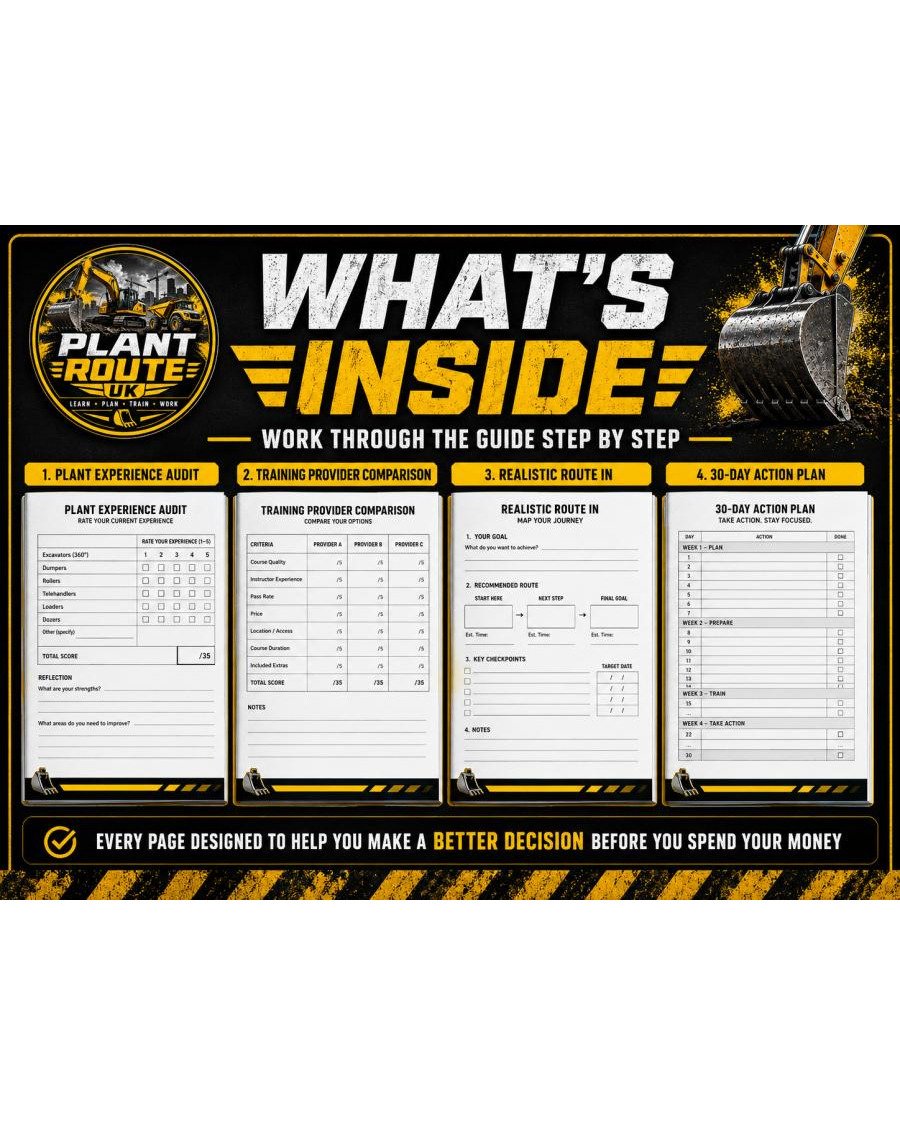
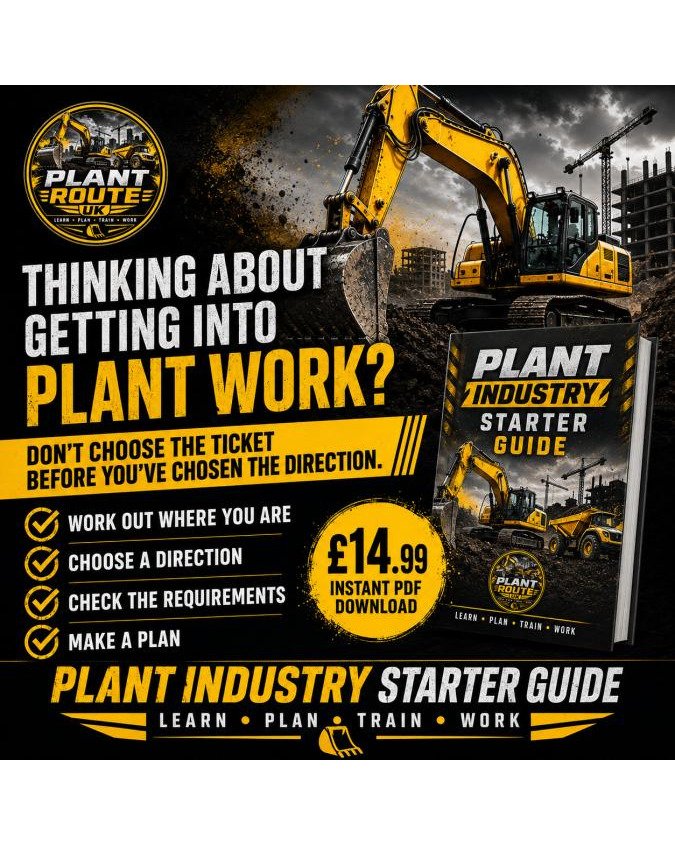
This guide from Plant Industry Starter Guide covers everything you need to know about breaking into the sector. Drawing on more than 30 years of hands-on experience, our guides help beginners understand training, licences, machinery, working conditions and realistic career options before spending money on courses or operator tickets.
Step 1: Understand CPCS Card Requirements for Beginners
The CPCS (Construction Plant Competency Scheme) card is the industry standard credential for plant machinery operators. Most construction firms and hire companies won't hire you without one.
Here's what you need to know: the CPCS card proves you've passed both a written test and a practical assessment on specific machinery. It's not optional, it's the minimum entry point.
The process works like this:
- You complete a training course on your chosen plant machinery
- You pass a written knowledge test
- You pass a practical operating assessment
- You receive your CPCS card (valid for 2 years)
Before you can sit the CPCS test, you must complete an approved training course. This is where most beginners get confused, the card itself isn't what you study for. You study for the machinery-specific training, then take the test to earn the card.
Common machinery categories for beginners include:
- Excavators (most popular entry point)
- Dumpers (rigid and articulated)
- Telehandlers
- Roller compactors
- Skid steer loaders
Start with one machine type. Don't try to learn multiple machines simultaneously, focus on one, get your card, then expand. Excavators are the logical first choice because they're the most in-demand and most frequently used on sites.
Step 2: Choose Your Plant Machinery Training Courses and Duration
Plant machinery training courses vary in length depending on the machine type and your prior experience. A typical course runs between 3 and 5 days for someone with no background.
The course teaches you machinery operation, safety protocols, and site procedures. You'll spend time in a classroom learning theory, then hands-on time actually operating the machine under supervision.
Here's what affects course duration:
- No previous experience: 5 days typical
- Some machinery experience: 3-4 days
- Prior plant or construction background: 3 days possible
After the course, you're ready to sit your CPCS test. The test itself happens on a separate date, usually within 1-2 weeks of completing your training.
Choose your training provider carefully. Look for:
- Approved CPCS training centres (not all providers are equal)
- Trainers with genuine site experience, not just classroom knowledge
- Small class sizes (ideally under 6 people per machine)
- Access to the actual machinery type you want to operate
- Flexible scheduling if you're working while training
Avoid providers that promise "guaranteed passes" or claim you'll be job-ready after one course. That's unrealistic. The course teaches you fundamentals. Real competence comes from hands-on site experience afterward.
Step 3: Build Your CV for Plant Operator Roles
Your CV for plant operator roles needs to highlight machinery experience, safety credentials, and reliability. Employers care less about your previous office or retail background and more about what you can do on site.
Structure your CV like this:
Personal profile (2-3 lines): State your CPCS certifications and machinery experience clearly. Example: "CPCS-certified excavator and dumper operator with hands-on experience on residential and commercial construction sites."
Key skills section: List machinery types, safety certifications (CSCS card, First Aid), and site experience. Be honest, don't claim experience you don't have. Employers check references and ask detailed questions in interviews.
Work experience: Start with your most recent plant or construction roles. Include:
- Job title (e.g., "Plant Operator", "Machinery Operator")
- Company name and project type
- Dates (months and years)
- 2-3 bullet points describing what you operated and what you achieved
If you're transitioning from retail or office work, include it but don't overemphasise it. A brief line is enough: "Retail supervisor, [Company], 2023-2024", then move on.
Qualifications section: List CPCS cards first, then any other relevant certs (CSCS, First Aid, Asbestos Awareness, Manual Handling).
What employers actually look for:
- Genuine CPCS certification (they'll verify it)
- Specific machinery types you can operate
- Evidence of site work, not just training
- Safety-conscious attitude (mention safety inductions, near-miss reporting, toolbox talks)
- Reliability (no unexplained gaps in employment)
Keep your CV to one page. Plant operators aren't hired for their writing skills. Short, clear, factual CVs perform better than lengthy ones.
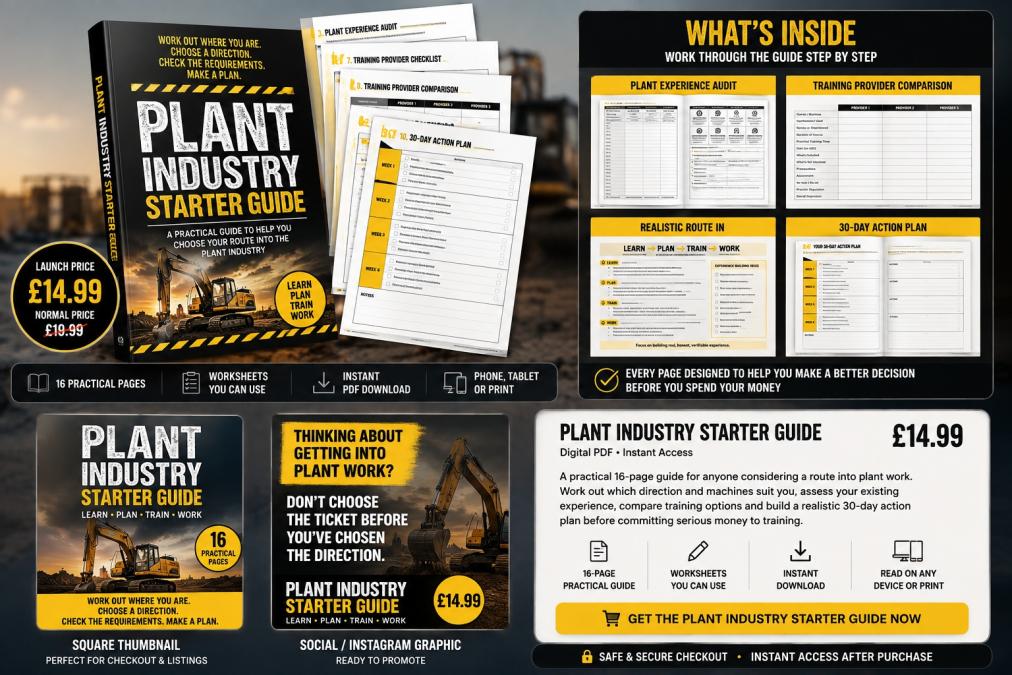
Get the Plant Industry Starter Guide →
Step 4: Gain Hands-On Plant Machinery Job Experience
This is where most beginners hit a wall: you need experience to get hired, but you need a job to get experience. The trick is breaking that cycle strategically.
Entry-level positions to target
Start with roles that explicitly hire people with CPCS cards but limited site experience:
Apprenticeship schemes. Some larger construction firms and hire companies run formal apprenticeships for machinery operators. These are structured, paid positions where you learn on the job. They're competitive but worth applying for.
Hire company roles. Equipment hire companies (the businesses that rent machinery to contractors) often employ operators to deliver, set up, and retrieve equipment. This gives you real machinery time without needing years of experience.
Small contractor positions. Independent builders and small construction firms often hire operators for specific projects. They're more flexible about experience than large companies.
Site labourer roles with machinery training. Some sites hire labourers and offer to train promising candidates on machinery. This is slower but still viable.
Don't aim for the biggest construction firms first. They want experienced operators. Start smaller, build your site hours, then move up.
How to approach construction firms and hire companies
Cold applications rarely work. You need to get in front of people.
Phone calls beat emails. Find the site manager's number (usually on the site hoarding or through the company website). Call and ask to speak to the site manager or plant supervisor. Say: "I'm a CPCS-certified [machinery type] operator looking for work. Do you have any current or upcoming projects needing operators?"
Most will say no. Some will ask for your CV. A few will invite you to visit the site. That's your win.
Visit sites in person. If there's a construction site near you with active machinery work, visit during working hours (early morning is best). Ask for the site manager. Introduce yourself, show your CPCS card, and ask if they're hiring. You'll stand out because most people won't do this.
Hire company visits. Equipment hire companies have offices and depots. Visit them directly with your CV and CPCS card. Explain you're looking for operator work, delivery, setup, or site support roles. They often hire quickly because staff turnover is high.
Networking. Tell everyone you know that you're a certified plant operator looking for work. Friends, family, previous colleagues, someone often knows a site manager or contractor. Personal referrals get you interviews.
Online job boards. Post on construction job sites and specialist plant operator boards. Include your CPCS card number and machinery types. Be prepared for lower-quality opportunities here, but they exist.
Volunteering and shadowing opportunities
If you can't find paid work immediately, consider shadowing or volunteering to build hours.
Shadowing. Ask hire companies or small contractors if you can shadow an experienced operator for free. You won't operate the machine, but you'll learn site procedures, safety protocols, and see how operators work in real conditions.
Volunteering on community projects. Some local councils and community organisations run construction or landscaping projects. They sometimes need machinery operators or are willing to let certified operators volunteer. It's unpaid but builds your CV.
Plant hire demonstrations. Equipment manufacturers and hire companies sometimes run open days or training events. Attend these, network with the people running them, and ask about opportunities.
These aren't ideal, but they're better than sitting at home waiting for a perfect job to appear.
Common Mistakes to Avoid
Doing multiple CPCS courses before getting site experience. Many beginners complete 3-4 courses before working a single day on site. That's wasted money. Get one CPCS card, work with that machinery for 6-12 months, then expand. Experience matters more than credentials.
Ignoring safety culture. Sites are dangerous.
Frequently Asked Questions
How do I get my first job as a plant operator with no experience?
Start by obtaining your CPCS card or NPORS certification, then target entry-level roles such as plant operative or equipment assistant with construction firms. Contact hire companies directly, attend job fairs, and use job boards specialising in trades. Many firms offer on-the-job training to certified operators willing to start at trainee level. Persistence and a well-written CV highlighting any transferable skills from previous work will improve your chances significantly.
Do I need a CPCS card to start gaining plant machinery job experience?
A CPCS card is not always required to begin work, but it is essential for progressing in the industry. Many employers prefer or require it before hiring. You can gain initial experience in support roles without one, but obtaining your CPCS certification early removes a barrier to employment and demonstrates your commitment. Most plant machinery training courses include CPCS card preparation as part of the curriculum.
What is the best way to approach construction firms for trainee positions?
Research firms operating in your area and contact their site managers or HR departments directly. Attend industry job fairs and networking events where you can meet hiring managers face-to-face. Tailor your CV to highlight any relevant experience, even if from different industries. Be honest about your experience level but emphasise your willingness to learn and your commitment to obtaining the necessary certifications. Follow up persistently but professionally.
How long does plant machinery training typically take?
Plant machinery training courses vary in duration depending on the type of equipment and certification level. Foundation courses usually take 3-5 days, whilst more comprehensive programmes can span 2-4 weeks. CPCS card acquisition involves both classroom training and practical assessment. Many courses run intensively over a few weeks, allowing you to balance training with part-time work. The total time to full competency typically ranges from 4-12 weeks depending on your chosen pathway and prior experience.