 how-to
Is Construction Work Right for Me? A 2026 Guide
Table of Contents
- Is Construction Work Right for Me: The Real Picture
- Construction Worker Pros and Cons
- Construction Skills and Qualities You'll Need
- Construction Site Working Conditions: What to Expect
- Construction Jobs with No Experience: How to Start
- Key Questions to Ask Yourself Before Starting
- Making Your Decision
- Frequently Asked Questions
Last Updated: October 17, 2026
Is Construction Work Right for Me: The Real Picture
Deciding whether construction work is right for you isn't straightforward. The decision depends on your personality, physical capability, financial situation, and what you want from a career. Plant Route UK provides practical digital guides for people interested in entering the plant machinery and HGV industries, helping them understand training, licences, machinery, working conditions and realistic career options before spending money on courses or operator tickets.
This guide walks you through the realities of construction work. We cover the genuine advantages and drawbacks. We explain the skills you'll actually need. Most importantly, we help you ask yourself the right questions before you commit.
Construction careers offer real rewards: solid pay, job security, and the satisfaction of building things. But the work is physically demanding, often outdoors in poor weather, and requires constant learning. Not everyone thrives in that environment.
By the end of this guide, you'll know whether construction is a genuine fit for you, or whether another trade might suit you better.
Construction Worker Pros and Cons
The Advantages
Job security stands out as a genuine strength. Buildings always need construction. Skilled workers are in demand across the industry. Unlike many office roles that can be automated or outsourced, construction requires hands-on expertise on site.
Pay is competitive. Entry-level roles pay reasonably well, and experienced workers earn significantly more. You build earning potential as you gain skills and qualifications.
You see tangible results. You build something real. You finish a day and point to what you've created. That's satisfying work for many people.
The variety keeps things interesting. Every project differs. Every site presents new challenges. You're not doing the same repetitive task in the same room every day.
Progression is clear. You start as a general labourer. You learn a trade. You become a tradesperson. You might supervise others or start your own business. The pathway is visible and achievable.
You work independently within a team. You have autonomy in how you complete tasks. You're trusted to make decisions on site. That appeals to people who dislike micromanagement.
The Drawbacks
Weather affects everything. Rain, snow, and frost stop work or make it miserable. You work outdoors in cold, heat, and wind. That's not ideal for everyone.
Physical demands are genuine. Your body takes strain. Repetitive movements cause injury. Heavy lifting accumulates over years. Back problems, knee problems, and shoulder problems are common in construction.
Job security swings with the economy. When building slows, work dries up. You might face periods without work. That uncertainty stresses some people.
Early starts are standard. Many sites start at 7 am or earlier. Finishing time varies. You might work late to meet deadlines. That schedule doesn't suit everyone.
The work is sometimes dirty and unpleasant. You'll get wet, muddy, and covered in dust. You'll work in confined spaces, at heights, and in uncomfortable positions.
Injury risk is higher than in office work. Accidents happen on construction sites. Proper safety training and equipment reduce risk, but hazard remains part of the job.
| Advantage | Drawback |
|---|---|
| Job security and demand | Weather dependence |
| Competitive pay | Physical strain on body |
| Tangible results | Economic cycles affect work |
| Variety and new challenges | Early starts and long hours |
| Clear progression path | Dirty, uncomfortable conditions |
| Autonomy and trust | Higher injury risk |
Construction Skills and Qualities You'll Need
Physical fitness matters. You need strength and stamina. You'll carry materials, climb ladders, and work for hours in physically demanding positions. You don't need to be an athlete, but you need genuine fitness.
Problem-solving ability is essential. Things go wrong on site. Materials don't fit. Weather delays progress. You need to think through solutions. Workers who troubleshoot problems become valued team members.
Attention to detail keeps you safe and keeps work accurate. Measurements matter. Safety procedures matter. Cutting corners causes accidents or poor quality work.
Communication skills help you advance. You need to understand instructions clearly. You need to ask questions when something's unclear. Later, if you supervise others, clear communication becomes critical.
Reliability is non-negotiable. Show up on time. Do what you commit to do. Follow through on tasks. Unreliable workers get let go first when work slows.
Willingness to learn continuously separates people who stagnate from people who progress. Construction involves new techniques, new regulations, and new equipment. You need to stay current.
Teamwork is genuinely important. Construction isn't solo work. You depend on others. Others depend on you. You need to work well within a team.
Construction Site Working Conditions: What to Expect
Construction sites are dynamic environments. You'll work alongside multiple trades. You'll encounter noise, dust, and activity constantly. That's normal and expected.
Safety protocols are strict and non-negotiable. You wear hard hats, high-visibility vests, and steel toe-cap boots. You follow site rules precisely. Shortcuts aren't tolerated. Safety training happens before you start work (Site rules and induction).
Hours are typically 7 am to 5 pm, Monday through Friday. Some projects require weekend work or longer hours. Overtime is common during busy periods.
Weather dictates conditions. In summer, you work in heat. In winter, you work in cold, sometimes in rain or snow. Wet conditions make work slower and more difficult. Some tasks stop completely in severe weather.
Physical demands are real. You might carry 25 kg loads repeatedly. You might stand for eight hours. You might work at height or in confined spaces. Your body adapts, but the demands don't disappear.
The noise level is high. Machinery, power tools, and multiple workers create constant sound. Hearing protection is required and essential.
Dust and debris are part of the job. Respiratory protection is necessary in some roles. Dust exposure accumulates over years.
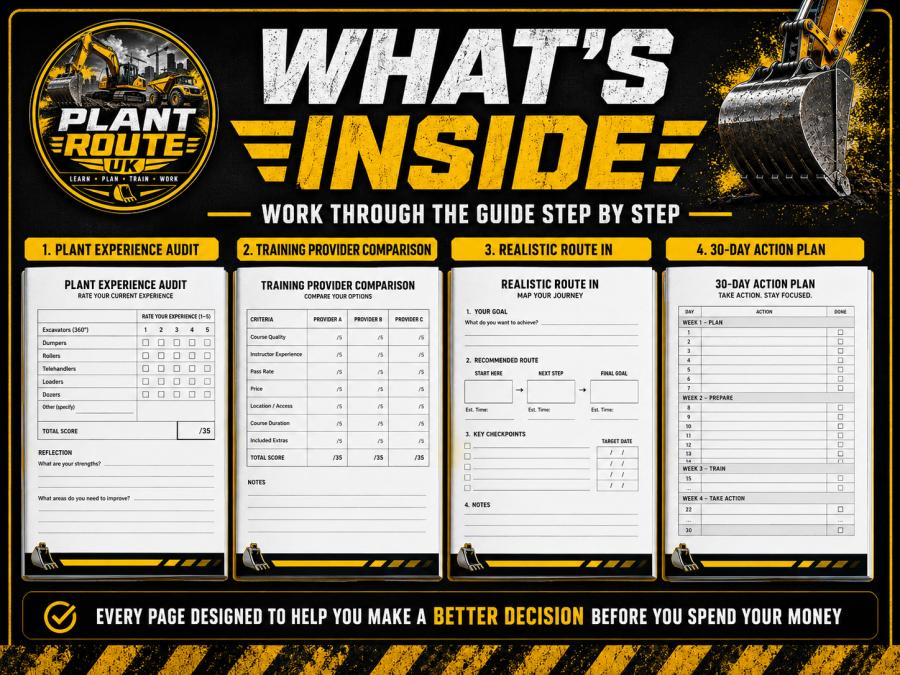
Get the Plant Industry Starter Guide →
Camaraderie on site is genuine. You work closely with the same team. Relationships form. Many construction workers value that community aspect.
Construction Jobs with No Experience: How to Start
Entry into construction doesn't require previous experience. Most people start as general labourers. You learn on the job while earning.
General labourer roles involve:
- Clearing and preparing sites
- Moving materials and equipment
- Assisting skilled tradespeople
- Cleaning up after work
- Following instructions from supervisors
You need no formal qualifications to start. You need fitness, reliability, and willingness to learn.
Find work through several routes:
- Contact local construction companies directly
- Use job boards and recruitment websites
- Ask people already working in construction for referrals
- Attend local Jobcentres that post construction vacancies
- Join apprenticeship programmes that combine work and training
Starting as a labourer typically leads to learning a specific trade. You might specialise in carpentry, plumbing, electrical work, or masonry. Many people complete apprenticeships while working.
Apprenticeships combine paid work with formal training. You earn while you learn. You gain qualifications that increase your earning potential. Apprenticeships typically last 3-4 years.
Plant Route UK provides practical digital guides for people interested in entering the plant machinery and HGV industries. Our guides help beginners understand training, licences, machinery, working conditions and realistic career options before spending money on courses or operator tickets.
Key Questions to Ask Yourself Before Starting
Ask yourself these questions honestly:
Do you enjoy physical work? If sitting at a desk bores you, construction appeals to you. If you prefer mental work over physical work, construction might frustrate you.
Can you handle being outdoors in all weather? If bad weather depresses you or makes you uncomfortable, construction presents genuine challenges.
Do you have the physical fitness now? Or are you willing to build fitness before you start? Construction is demanding from day one.
Can you wake up early consistently? Early starts are standard. If you struggle with early mornings, construction will be difficult.
Are you comfortable with risk? Construction carries injury risk. Safety reduces it, but hazard remains. Some people accept that risk. Others don't.
Do you want job security or flexibility? Construction offers security but less flexibility. You work when and where the job requires.
What's your financial situation? Can you handle periods without work? Construction employment fluctuates. You need financial reserves for slow periods.
Are you willing to learn continuously? Construction evolves. You need to stay current with techniques, regulations, and equipment. Willingness to learn is essential.
Do you value tangible results? If you want to see what you've accomplished, construction satisfies that need. If you prefer abstract work, construction might feel less rewarding.
Making Your Decision
This decision is personal. Construction suits some people perfectly. It doesn't suit others. Both outcomes are fine.
Spend time on construction sites if you can. Watch workers. Ask them questions. See how the work feels to you. That real-world observation beats any guide.
Talk to people already doing construction work. Ask about their genuine experiences. Ask what surprised them. Ask what they wish they'd known before starting.
Consider your alternatives. What other careers interest you? How do they compare to construction? What matters most to you in a career?
Start with a trial period if possible. Work as a general labourer for a few months. You'll quickly know whether construction is right for you. That real experience beats theoretical knowledge.
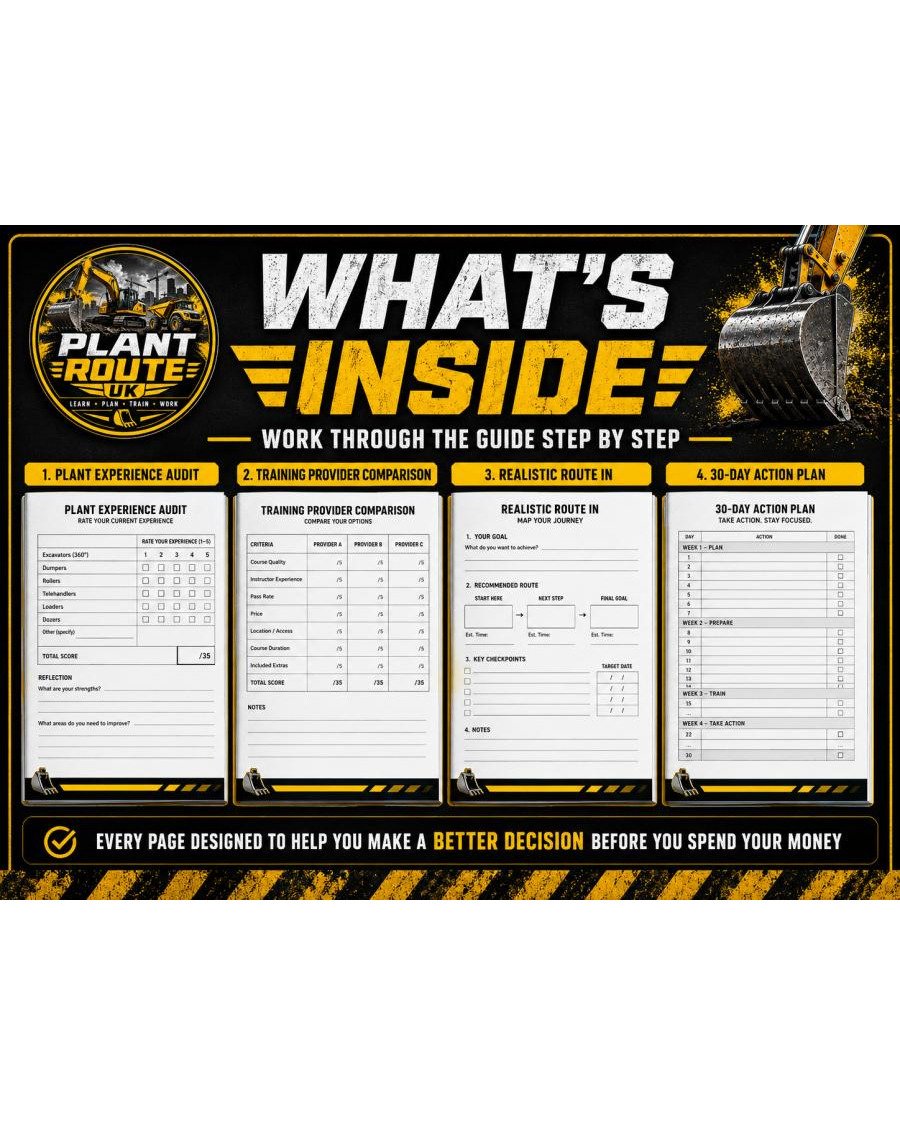
Plant Industry Starter Guide provides detailed guidance on training pathways, licensing requirements, and realistic career options once you've decided construction is worth pursuing. Our guides help you avoid costly mistakes and understand exactly what you're getting into before you invest in training or qualifications.
The honest truth is this: construction work isn't right for everyone. But for people who thrive in physical work, value tangible results, and want genuine job security, construction offers a solid, rewarding career path. Take time to answer the questions above. Be honest with yourself. Then make your decision from a position of genuine understanding rather than assumption.
Frequently Asked Questions
How do I know if construction work is right for me?
Consider whether you prefer hands-on work over desk-based tasks, enjoy physical activity, and can handle outdoor conditions and early starts. Assess your tolerance for repetitive work, teamwork, and potential job insecurity between projects. If you value variety, problem-solving on site, and seeing tangible results from your labour, construction may suit you. Reflect honestly on your physical fitness, mental resilience, and whether the salary prospects align with your financial goals.
What construction skills and qualities matter most for beginners?
Physical fitness and stamina are essential, but equally important are reliability, attention to detail, and willingness to learn. Safety awareness is non-negotiable on site. Practical problem-solving, teamwork, and the ability to follow instructions precisely will set you apart. Communication skills help when working alongside different trades. Many employers value a positive attitude and punctuality more highly than prior experience when hiring entry-level workers.
Can you get a construction job with no experience?
Yes. Many construction roles, such as general labourer or apprentice positions, welcome candidates with no prior experience. Employers often provide on-the-job training for entry-level roles. Having relevant qualifications like CSCS (Construction Skills Certification Scheme) cards or basic health and safety certifications strengthens your application. Starting as a labourer and progressing to skilled trades is a common pathway. Demonstrating reliability, willingness to learn, and a strong safety mindset can compensate for lack of experience.
What are typical working conditions on a construction site?
Construction sites are outdoor environments exposed to weather, noise, and dust. Work often starts early, typically 7 or 8 a.m., and runs until mid-afternoon. Physical demands vary by role but often include standing, lifting, climbing, and repetitive movements. Safety protocols are strict, requiring protective equipment and adherence to regulations. Job security can be uncertain as contracts are often project-based. However, variety is common, no two days are identical, and you'll see visible progress from your work.
Construction work can transform your career if it's the right fit for you. Plant Industry Starter Guide helps you understand whether it is. Our practical guides cover training requirements, realistic working conditions, and honest career pathways before you spend money on courses or certifications. Get the Plant Industry Starter Guide and make your decision with confidence.